Category: Psychological phenomena

[rank_math_breadcrumb]

Read about and understand the various psychological phenomena you observe in your day-to-day life. Get answers to common curiosities about everyday behavior. Understanding the root causes of your behaviors and those of others will greatly improve your understanding of human psychology. No human behavior, however small, is insignificant.

Top posts:

Recent posts:

  • Mistaking a stranger for someone you know

    Ever had that experience where you see a friend on the street and walk up to greet them, only to realize that they’re a complete stranger? Ever mistaken a total stranger for your crush or lover?

    What’s funny is that sometimes you realize they’re a stranger after you’ve greeted them and they’ve greeted you back.

    Even funnier is when a complete stranger greets you out of the blue and you greet them back without having any freaking idea who he is!

    In both cases, when you’re well past each other, both of you are thinking, “Who the hell was that?”

    In this article, we explore why our mind plays such awkward and funny tricks on us.

    Thinking, reality, and perception

    We don’t always see reality as it is but rather we see it through the lens of our own unique perception. What’s going on in our minds sometimes influences what we perceive.

    This is especially true when we are under the grip of an emotional state or when we’re thinking about something obsessively.

    For example, out of fear we might mistake a piece of rope lying on the ground for a snake or a bundle of thread for a spider, and out of hunger, we might mistake a colored round plastic cup for a fruit.

    Strong emotional states such as anger, fear, and even anxiety can make us misperceive reality in a way that reinforces these emotions.

    Even thinking about something in an obsessive way, with or without the emotion, can distort the way we perceive reality.

    When you’re obsessed with someone, you tend to think about that person a lot and you’re likely to mistake other people for that person.

    It’s often shown in the movies: when the actor has been ditched and is wallowing in his sorrow, he suddenly notices his lover on the street. But when he goes up to her, he realizes that she’s someone else.

    These scenes are not just included to make the movie more romantic. Such things happen in real life too. 

    It’s just that the actor is continually over-thinking about his lost love, so much so that his thinking is now tipping over into his reality, so to speak.

    Just like a person obsessively in love with someone tends to see that person everywhere, a person dying from hunger will see food where there is none because he’s obsessively thinking about food. After watching a horror movie, a person is likely to mistake a coat hanging in the closet for a headless monster.

    This is why when someone’s scared and you nudge them from behind they freak out and scream or when you’ve just thrown away a large spider, an innocuous itch on the leg makes you slap and jerk it like a lunatic!

    Your obsessive thoughts are overflowing into your reality and you subconsciously react to them before you even get a chance to be fully conscious and separate facts from imagination.

    that awkward moment when

    Making sense of incomplete information

    Why do we, out of so many people that we see on the street, only misperceive one particular person but not the others? What’s so special about that one stranger? How can one stranger apparently seem less strange than the other strangers?

    Well, that’s pretty much like asking why we misperceive a rope for a snake and not a coat or why we misperceive a coat for a ghost and not a rope.
    Our mind tries to make sense of whatever little information our senses provide it with.

    This ‘making sense’ implies that the mind compares what it senses with what it already knows. Whenever presented with new info, it thinks, “What’s similar to this?” Sometimes it even convinces itself that similar objects are the same and we have what are known as the errors in perception.

    The reason you go up to a particular person to greet them and not the others is that the person resembles your acquaintance, friend, crush or lover in some way. It may be the size of their bod, their skin colour, hair colour or even the way they walk, talk or dress.

    You mistook a stranger for your for someone you knew because the two had something in common.

    The mind tries to make sense of information as soon as it can and so when it noticed the stranger, it checked its information database to see who that might be or, in simpler words, it asked itself “Who is similar? Who looks like that?” and if you happened to think a lot about that person lately, your odds of misperception are bound to increase.

    The same thing happens on the auditory level when someone says something vague to you that you’re unable to make sense of. 

    “What did you say?”, you reply, confused. But after some time you magically figure out what they were saying, “No, no it has nothing to do with that”.Initially, the information was vague, but after some time the mind made sense of it by processing whatever broken information it had.

  • Self-sabotage behavior explained

    Self-sabotage behavior explained

    In this article, we discuss self-sabotage behavior, reasons why people engage in this behavior, and common examples of self-sabotaging behaviors.

    How many times do you hear people telling you, rather sanctimoniously, “Be yourself”? And to complete the famous Oscar Wilde quote, they add, “Everyone else is taken”.

    Let’s say you decide to heed the advice. You decide to ‘Be yourself’. But what’s ‘yourself’ anyway? How do you know what this ‘yourself’ is so that you can ‘be’ it?

    What makes you, you?

    When you were born, you had very little idea what to do with yourself. Except for some genetically programmed behaviours, your mind was a clean slate, ready to learn things from the world at an astonishingly fast rate.

    You copied the behavior of your parents, your siblings, and all those who surrounded you. Your subconscious mind was fresh and fertile and the things that it learned turned into your core beliefs instantly. The main purpose of the formation of this belief was to ensure your survival by letting you quickly adapt to your immediate surroundings.

    The beliefs that you formed in the first six years of life comprise your core beliefs and these are the hardest to change. As you moved through adolescence and into adulthood, the life experiences you went through continued to shape your psyche and modify your beliefs.

    Most of your behavior is nothing but the manifestation of these beliefs. They’re programs that you carry out throughout your lifetime, mostly repeating what you copied from those that surround you. 

    You don’t have any identity of your own. Your identity is a mixture of the identities that you’ve come across in your entire lifetime.

    This is the main reason why ‘a man is known by the company he keeps’ and why people resemble their parents in their behaviour so much. Some people mistakenly believe that people behave as their parents due to genetic reasons. But that’s not true. 

    Your parents’ genes may determine your looks, height or bodyweight but the reason why you act like them is because you had this innate proclivity to copy their behaviours as a child.

    The concept of self-sabotage

    If many of your beliefs are those that you received from your parents, teachers, priests and other authority figures that you spent most of your childhood with, then your mind will naturally repel all the information that seems to contradict these beliefs. The mind does what it can to protect its identity.

    An obvious way in which this is done is by criticizing all those who don’t agree with you but there’s a more insidious way your mind rejects what it doesn’t believe to be true…

    This is known as self-sabotage. If you were lucky enough to have a very positive, reassuring and empowering environment as a kid, then you’re likely to have similar beliefs about yourself and you’re likely to be very healthy psychologically. 

    But for most of us, that is not the case. The psyche of most of us is ‘damaged’ in one way or the other.

    A damaged psyche typically means a psyche that contains beliefs that are negative and limiting. Because most people’s environment was negative and limiting, they grew up to believe that they’re not worthy.

    What do I mean by a negative environment? Parents who criticize their children a lot, teachers who punish children for making mistakes and uncles and aunts who give sage advice about what can and can’t be done in life comprises this ‘negative environment’. 

    As a result, when children in such conditions grow up, they develop some expectations about themselves and won’t go beyond these expectations even when they come across good opportunities, or worse, they try to sabotage such opportunities.

    In other words, they won’t try to get what they believe they can’t have and if they do get it, they’ll get rid of it quickly so that their life remains consistent with their deeply-held beliefs.

    Examples of self-sabotage behavior

    To clarify the idea of self-sabotage, let me give you a few examples…
    Arun’s dad always told him that life is hard and you can’t make much money without being dishonest. Arun’s family was very religious and valued honesty above everything else.

    This programmed Arun’s mind with the belief, “To become rich you have to be dishonest and dishonesty is a bad thing. Therefore, I can’t be rich.”

    When Arun grew up, he remained financially stuck at one level without understanding why. Though he wanted to make more money, he always found a way to ruin any opportunity that could mean more income. 

    Actually, it was his subconscious that was cleverly working in the background to prevent Arun from becoming rich because it had to maintain the belief that ‘all rich people are dishonest’.

    Shazia was the eldest among her siblings, all of them girls. Her parents and relatives always teased her by pointing out that her sisters were much more beautiful than her and that she would be lucky if she found ever found a man.

    Shazia’s mind turned this casual joke into a belief because it was repeated often and at a time when her mind was most malleable. She grew up to become a fairly attractive woman, but she still carried this belief in the dark corners of her psyche.

    Though her attractiveness attracted the attention of a lot of men, every time she got into a relationship, it only lasted for a month or so. She was having great difficulty in maintaining relationships.

    She found ways to end her relationship by being possessive and insecure but the real reason why she was doing all this was because of a casual joke that she got repeatedly got exposed to in her childhood. 

    Her subconscious was calling the shots and playing the real game. Every time she got into a relationship, her subconscious mind thought, ‘I don’t deserve this, I’m not pretty. Let’s see how I can get out of this’.

    Another common example of self-sabotage is people who win a lottery. People who win millions in the lottery do not subconsciously consider themselves worthy of such huge amounts of money and so spend all the money within months so that they can return to the financial level that is consistent with their beliefs.

    Acquire the beliefs of people you admire

    There is no magic formula with which you can change your beliefs overnight that have taken years to form. The first step is challenging them. When you do that you will have gained power over your mind. The more you question your beliefs, the more likely it is that you’ll soon get rid of the ones that you don’t want.

    Prove to your mind that its dearly-held negative limiting beliefs are wrong by gaining contradictory life experiences. Surround yourself with people who you’re willing to copy, who have the beliefs you want to have and the personality traits you want to develop.

    By doing this you’d be using the natural tendency of the mind to your own advantage. When you surround yourself with the people you admire, your mind will start learning from them and copying them and gradually un-learn what it learned by copying others in the past. The mind is like water, it takes the shape of the vessel it is poured in.

  • The placebo effect in psychology

    This article attempts to explain the famous placebo effect in psychology, throwing light on the historical background of the effect.

    You go to a doctor with a severe headache and fever. After examining you for a while, he gives you some shiny pills and asks you to take them every day after meals.

    He says confidently that in a week or so you’d be absolutely fine and asks you to inform him when you return to the pink of your health.

    After a week, your illness is gone and you’re perfectly healthy. You call the doctor and tell him that you’d taken the pills as prescribed. “The pills worked! Thank you”.

    “Alright, hold your horses. They were just sugar pills”, says the doc, turning your elation and gratitude into an incredulous shock.

    This strange phenomenon is known as the placebo effect.

    Your mind affects your body

    The placebo effect is a widely recognized phenomenon in the field of medicine. Studies after studies have confirmed that it works. We don’t know how exactly it works but that hasn’t stopped doctors from using it to help their patients.

    The most likely explanation is that the mere belief that a particular medical intervention works changes our brain chemistry, producing chemicals that relieve the symptoms. 

    When you exercise, for example, you’re actually putting your body under stress, putting it through the pain. Your body then releases pain-relieving chemicals called endorphins that make you feel good after a session of exercise.

    It’s likely, that similar mechanisms are at play when, for instance, you seek social support in the face of trauma or tragedy. Seeking social support in such situations makes you feel better and helps you cope.

    Similarly, in the placebo effect, when you’re convinced that a medical intervention works, the belief probably kicks in your body’s natural healing processes.

    Placebo effect examples

    In 1993, J.B. Moseley, an orthopaedic surgeon, had doubts regarding the arthroscopic surgery that he performed to fix knee pain. It is a procedure guided by a tiny camera that sees inside the knee and the surgeon removes or smooths out the cartilage.

    He decided to carry out a study and divided his patients into three groups. One group got the standard treatment: anesthetic, three incisions, scopes inserted, cartilage removed, and 10 litres of saline washed through the knee.

    The second group got anaesthesia, three incisions, scopes inserted, and 10 liters of saline, but no cartilage was removed.

    The treatment of the third group looked from the outside like the other two treatments (anaesthesia, incisions, etc.) and the procedure took the same amount of time; but no instruments were inserted into the knee. This was the placebo group.

    It was found that the placebo group, as well as the other groups, recovered from knee pain equally!

    There were patients in the placebo group who needed canes before they were subjected to the sham surgery. But after the surgery, they no longer needed the canes and one grandfather even started playing basketball with his grandkids.

    Rewind back to 1952 and we have the most bizarre case of the placebo effect ever documented…The doctor’s name was Albert Mason and worked as an anaesthetist at the Queen Victoria hospital in Great Britain.

    One day, while he was about to give an anaesthetic, a boy of 15 was wheeled into the theatre. The boy had millions of warts (tiny black spots that make your skin look elephant-like) on his arms and legs.

    The plastic surgeon for whom Albert Mason worked, was trying to graft skin from the boy’s chest which didn’t have these warts onto his hands. This actually made the boy’s hands worse and the surgeon was kind of disgusted with himself.

    So Mason said to the surgeon, “Why don’t you treat him with hypnotism?” At that time it was well-known that hypnotism could make the warts vanish and Mason himself had successfully removed them several times using hypnotism.

    The surgeon looked at Mason pityingly and said, “Why don’t you?” Mason immediately took the boy out of the theatre and performed hypnosis on the boy, giving him the suggestion, ‘The warts will fall off your right arm and new skin will grow which will be soft and normal’.

    He sent him away and told him to come back in a week. When the boy returned it was clear that the hypnosis session had worked. In fact, the change was startling. Mason rushed to the surgeon to show him the results.

    The surgeon was busy operating on a patient and so Mason stood outside and lifted both the arms of the boy to show the difference. The surgeon peeked at the arms through the glass door, handed over his knife to his assistant and rushed outside. 

    He examined the arm carefully and was awestruck. Mason said, “I told you warts go” to which the surgeon retorted, “Warts! This isn’t warts. This is congenital Ichthyosiform Erythrodermia of Brocq. He was born with it. It’s incurable!”

    what is the placebo effect

    When Mason published this incredible healing event in the British Medical Journal, it created waves.

    Many patients with this congenital skin condition flocked to Dr Mason hoping to get cured.

    None of them responded at all. Albert Mason was never again able to repeat that first incredible success and he knew why. Here’s how he explains it in his own words…

    “I now knew it was incurable. Beforehand, I thought it was warts. I had a conviction that I can cure warts. After that first case, I was acting. I knew it had no right to get well.

  • What causes identity crisis?

    What causes identity crisis?

    This article will throw light on the concept of psychological identity, how it’s related to ego, and the causes of an identity crisis.

    We have many identities that we acquire from our past experiences and cultural backgrounds. These identities may be broadly classified as positive (the identities we like) and negative (the identities we dislike).

    For example, you may have a positive identity of ‘being a successful person’ and a negative identity of ‘being short-tempered’.

    Identity crisis happens when a person loses a psychological identity- when they lose a self-concept; when they lose a way they used to define themselves.

    It can be either an identity that they liked (positive) or an identity they disliked (negative). In most cases, an identity crisis is a result of losing an identity that served to increase a person’s self-worth i.e. a positive identity.

    Identity and the ego

    We suffer from an identity crisis when we lose an identity that we were using to feed our ego with. The purpose of most of our identities is just that- to sustain our ego.

    One of the major tasks of the subconscious mind is to protect our ego. It does all it can to achieve that end, including maintaining a worthwhile identity.

    People can identify with almost anything- a material possession, a place, a friend, a religion, a lover, a country, a social group, and so on. If you want to know what are the ideas or things you identify with, just pay attention to the words that you normally place after “my”….

    • My city 
    • My country
    • My job
    • My car 
    • My lover
    • My college
    • My favorite sports team

    Anything you add after “my” forms your extended identity, ideas you attach to your own self; ideas you use to define yourself. It’s easy to understand why people get so attached to their extended identities. It’s just an attempt to raise one’s self-worth.

    If you have a friend who owns a Mercedes, he’ll see himself as ‘the Mercedes owner’ and project that identity to the world to boost his self-worth. If your brother studied at MIT, he’ll project the identity of being an MITian to the world.

    People become strongly attached to their identities for a valid reason- it helps them maintain their self-worth, a fundamental goal of all humans. So, losing an identity means losing one’s self-worth, and nobody wants that.

    When a person loses one of their important, ego-boosting identity, identity crises happens. 

    causes of identity crisis

    Identifying with temporary things leads to an identity crisis

    No death, no doom, no anguish can arouse the surpassing despair which flows from a loss of identity.

    – H.P. Lovecraft

    A person who identifies strongly with his job will suffer from a severe identity crisis if he gets fired. A person who loses his Mercedes in an unfortunate accident will no longer see himself as ‘the proud Merc owner’.

    A person who mainly sees himself as ‘the lucky husband of beautiful Janel’ will lose all his self-worth if his marriage fails.

    The only way to avoid an identity crisis is to not identify with temporary things at all. I know that’s easier said than done, but you can do it by increasing your awareness of psychological phenomena and observing them objectively.

    One way would be to become more knowledgeable by reading articles such as the one you’re reading right now.

    When you identify with temporary things, your self-worth automatically becomes fragile. You never know when these things will be taken away from you. Your self-worth will then become dependent on the whims of life.

    What then should I identify with?

    Even if we give up identifying with temporary things, we’ll still crave to identify with something because that’s how the mind works. It can’t stand being nothing. It has to find a way to define itself.

    Since our goal is to maintain our self-worth and prevent it from being too fragile, the only logical solution is to identify with relatively permanent things.

    When you identify with your knowledge, skills, and personality, these identities will remain with you till the day you die. You can’t lose these things in a fire, accident, or divorce.

  • Distorted self-image: What causes it?

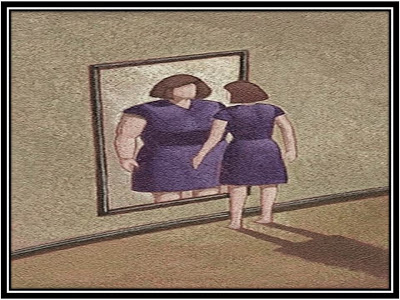
    Distorted self-image: What causes it?

    Our self-image is how we see ourselves. When someone has a distorted self-image, it means how they see themselves is inaccurate. Our self-image or self-concept not only includes our physical appearance but also the beliefs we have about our own abilities, talents, values, etc.

    However, in this article, my focus will be on physical appearance. People with distorted self-image have a distorted perception of their own looks.

    To clarify this concept, I want you to go through the following two stories:

    Sarah had an accident recently that resulted in some stitches on her forehead. When the stitches were removed, she had slight stitch marks that were barely noticeable.

    One day, at a party, someone asked her about those marks.

    When she went home that day, she checked the marks in the mirror for hours. She had thought they were barely noticeable. Turns out she was wrong. The marks were huge and glaring.

    She had trouble sleeping that night as she was constantly worried about the marks. When she was getting ready for work the next day, she made an extra effort to hide the marks using make-up, something she had never done before.

    Max was the most famous plastic surgeon in town. It was this reputation that had brought Cindy under his knives.

    She had long been suffering because of her big nose. She’d thought of going under the knife a long time ago, but didn’t muster enough courage until today.

    The surgery went smoothly and Max was able to give Cindy just the kind of nose shape she wanted.

    When the surgery was over, Max was excited to show her the mirror- he felt like Michelangelo. But as soon as Cindy saw her face in the mirror, she didn’t react as Max had expected. Instead, she wore a disappointed expression on her face and said:

    “I look just the same as before- you didn’t do a thing.”

    Max did everything he could to prove to her that the surgery was successful. He showed her before and after photos, but to no avail. Cindy still thought her nose looked big.

    Many plastic surgeons have had similar experiences. Studies show that people suffering from Body Dysmorphic Disorder (BDD), who have distorted self-images, tend to be dissatisfied with cosmetic surgeries.1

    Negative/distorted self-image is often mental, not physical

    People with a negative or distorted self-image have a distorted mental picture of their own looks. Even if they look fine physically, their brains deceive them into believing that there’s something wrong with their looks.

    In other words, they don’t see the reality of their looks, but only a distorted version of it. Note that they’re not just irrationally complaining about their looks, their eyes are lying to them, too.

    Our beliefs and emotional states can distort the way we see reality. Ever mistook a piece of rope for a snake? Most probably, that happened because you fear snakes.

    After watching a horror movie, people’s minds create ghoulish images out of harmless objects they see around them.

    Once, while returning home in the evening, I noticed a stray dog just outside our main gate sitting there comfortably. I had to shoo it away so I could enter my house. This happened for three consecutive days.

    The dog was no longer there from the fourth day onward. Yet, when I walked on that street toward my house, my mind created the image of the dog for a brief moment.

    In my mental image, the dog sat in the same position as I had seen it sitting in for the past three days. Only a careful look told me that there was no dog there.

    This happened for a few days and ended when my mind was ‘fully convinced’ that there wasn’t any dog there.

    I should mention that I have had a traumatic experience with a dog when I was a kid, so that may have contributed to this faulty perception.

    The point is: our mind does what it can to protect us from danger, even if it means creating false images and misperceptions. It errs on the side of caution so we can take action beforehand to avoid any possible danger.

    When my mind showed me a dog where there was none, it was warning me so I could be better prepared to handle the situation.

    When the mind lies about looks

    Such distortions not only happen with external objects like dogs or ropes but also with our own looks. 

    A person who fears growing old may see himself older in the mirror than he actually is. There are countless examples of women who see themselves as fatter than they actually are.

    Have you noticed that you look a bit different each time you look in the mirror throughout the day?

    In the mornings, when you feel fresh, you look fresh and attractive. In the evenings, when you’re exhausted and stressed out, you look dull, ugly, and unattractive.

    Many people come home from work, school, or college and look at the mirror, thinking, “Gosh! Is that how I looked all day?” 

    If you happen to look in the mirror right after you do something great, such as lifting a heavy weight or winning a game, you’ll notice you look amazing.

    On the contrary, when you’re down, feeling defeated or depressed, you’ll look at an ugly face in the mirror. It’s nothing but your mind playing tricks on you. Studies confirm that depressed people negatively distort their body images.2

    Negative self-reinforcing cycle

    When you have a negative, distorted self-image, you don’t see reality as it is. You filter everything out that might challenge your belief, and you see everything that supports it.

    Every day, you find lots of clues that support the false mental picture that you have of yourself.

    When you look in the mirror, you’ll only focus on those body parts or facial features that you believe are ‘defective’. These ‘flaws’ appear more defective and conspicuous than they really are.

    At the same time, you’ll forget about the many nice features that you may have. Your conviction of having a poor self-image will become stronger and stronger every day unless you let go of your false mental self-image.

    How to improve self-image

    As you might have noticed in Sarah’s story, the way our minds cause us distress is by turning a molehill into a mountain.

    Yes, there were marks on Sarah’s forehead, but they were barely noticeable. They didn’t negatively affect her overall looks. Yet, her mind tried to convince her otherwise. Her worry and false belief grew till she was forced to do something about it.

    That seed (comment) that got planted into her mind at the party turned into a full-fledged belief, a conviction.

    The first thing a person suffering from a negative self-image should do is try to stop the brain in its tracks when it’s trying to amplify the false belief. If you think your nose is too big, ask yourself: What proof do I have that my nose is too big?

    One comment at a party doesn’t cut it. How many people have commented on your big nose? Have people found you unattractive because of your nose?

    Take pictures of your nose from all angles and save those in your phone where your nose doesn’t look that big. Use these pictures to reassure your mind that your nose isn’t that big. The mind believes pictures better than any logic.

    If people continue to find you attractive despite your ‘big nose’, there’s a good chance your nose isn’t interfering with your attractiveness.

    Be mindful of the mind’s tendency to make a problem appear bigger than it actually is.

    What’s all the fuss about, anyway?

    As with so many other things in human behaviour, it comes down to reproduction. Your mind distorts your self-image to warn you that you’ve become unattractive. If you’re not attractive, you have trouble making friends and finding mates.

    Essentially, the mind cares about looking good so much that even a slight, insignificant flaw in one’s looks is frowned upon.

    People with BDD become obsessed with their looks. It’s like their mind goes into overdrive. They worry about their flaw all the time and constantly compare themselves to others.

    Someone who thinks their nose is too big will fixate on others’ perfect noses. Someone who hates their skin color can’t help but notice the perfect skin color others have.

    Needless to say, distorted self-image can ultimately lead to depression, and a long term tendency is even related to suicidality.3

    Looking good is such serious business for the mind that failing to achieve makes it drive people to the point of depression and suicide. The mind cares about reproduction more than it cares about happiness or even survival.

    Don’t think that just because you’re free from distorted self-image and BDD, your mind isn’t fooling you. Research has shown that people perceive their own beauty to be greater than what others say about them.4

    Your mind cares about looking good so much that it lies to you, telling you that you’re more attractive than you really are. When one small thing goes wrong, your mind tips over to the other side and becomes defensive. Your mind loses its mind.

    References:

    1. Crerand, C. E., Franklin, M. E., & Sarwer, D. B. (2006). Body dysmorphic disorder and cosmetic surgery. Plastic and reconstructive surgery, 118(7), 167e-180e.
    2. Noles, S. W., Cash, T. F., & Winstead, B. A. (1985). Body image, physical attractiveness, and depression. Journal of consulting and clinical psychology, 53(1), 88.
    3. Phillips, K. A., Coles, M. E., Menard, W., Yen, S., Fay, C., & Weisberg, R. B. (2005). Suicidal ideation and suicide attempts in body dysmorphic disorder. The Journal of clinical psychiatry.
    4. Springer, I. N., Wiltfang, J., Kowalski, J. T., Russo, P. A. J., Schulze, M., Becker, S., & Wolfart, S. (2012). Mirror, mirror on the wall…: self-perception of facial beauty versus judgement by others. Journal of Cranio-Maxillofacial Surgery, 40(8), 773-776.
  • Top 7 motivational rock songs to keep you motivated

    Top 7 motivational rock songs to keep you motivated

    It’s a well-known fact of human behaviour that beliefs become stronger by repetition. Even if a statement wasn’t a belief initially, it can get converted into one if we get exposed to it enough number of times.

    Beliefs are nothing but memories of the past. If you recall your past memories, you’ll realize that you remember events associated with an emotion much more strongly. Songs are rhythmic and elicit emotion in you. This is a perfect recipe for a solid memory.

    A song not only elicits emotion but sends you its message repeatedly. Due to this, your mind is very likely to alter its belief system so that it matches the message in the song.

    Motivational rock songs have strong, positive messages in them and hearing such songs will definitely keep your belief system healthy and provide you with the right kind of attitude to face the ever-increasing life challenges.

    7) Indestructible – Disturbed

    Disturbed is easily one of my favourite bands. Almost all the songs that I’ve heard from Disturbed are good. The lead vocalist’s voice is just sick and it’s amazing the types of songs he can pull off.

    6) Under The Knife – Rise Against

    I stumbled on this song while I was searching for a track I had heard in the movie Never Back Down. I was surprised that I hadn’t paid attention to this brilliant track from the same movie.

    5) No Giving Up – Crossfade

    Powerful lyrics reminding the importance of never giving up, even if you’ve given everything you got. The tune is very catchy too.

    https://youtu.be/iqB_cZq7Clw

    4) Hater – Korn

    A slap in the face of haters who try to bring you down. Though originally written about bullying, it is the ultimate response to all kinds of haters out there hell-bent to watch you fall.

    3) Stand Up And Fight – Turisas

    The lyrics are gold and relatable to everyone who’s struggling in any way in life and is on the brink of quitting. This song will pull you back from the abyss of hopelessness.

    https://youtu.be/DqPRaJyBUjk

    2) Hungry – Rob Bailey & The Hustle Standard

    Perfect workout song. This will turn you into a beast, guaranteed. 

    1) Sticks & Bricks – A Day To Remember

    If you can’t get motivated by this song, there’s nothing that can motivate you. The best thing about this song is how it fuels motivation through anger.

  • The power of habit and the story of Pepsodent

    I recently came across a mind-blowing story about how Pepsodent was launched in the market and how brushing teeth became a worldwide habit. I came across the story in a book titled The Power Of Habit by Charles Duhigg.

    To those of you who have read the book, this post will serve as a nice little reminder and those of you who haven’t or don’t have the time to, I suggest you go through this eye-opening story that encapsulates the very essence of how habits work and further solidify your understanding.

    The story of Pepsodent

    Before you continue, make sure you’ve read my articles about habits especially the one about the science behind how habits work. In that article, I described how habits are governed by Triggers, Routines, and Rewards and the story of Pepsodent illustrates the same principles in a lucid manner.

    the power of habit

    Claude Hopkins was a prominent advertiser who lived in America around the time of World War 1. He had a unique ability to advertise products in such a way that they became instant hits in the marketplace. He had turned many previously unknown products into household names. His secret was habit.

    He knew how to align the products with the daily habits of people by making sure that the use of the product is triggered by some activity that people do daily.

    For instance, he made Quaker Oats famous by telling people that ‘eating it in the morning as a breakfast cereal will provide you with energy for the whole day’. So he connected the product (oats) with an activity that people do every day (breakfast) and promised a reward (energy for the whole day).

    Claude Hopkins, the genius, now faced a predicament. He was approached by an old friend who said that he had experimented with some chemicals and had made the ultimate dental cleaning concoction that he called Pepsodent.

    Though his friend was convinced that the product was amazing and would be a hit, Hopkins knew that it was a huge risk.

    He essentially had to develop a whole new habit of brushing teeth among the consumers. There was already an army of door-to-door salesmen hawking tooth powders and elixirs, most of them going broke. However, after his friend’s persistent insistence, Hopkins finally designed a national level ad campaign.

    To sell Pepsodent, Hopkins needed a trigger- something that people could relate with or something that they did every day. Then he had to connect that product to that trigger so that the use of the product (routine) led to a reward.

    While going through dental books, he came across a piece of info about mucin plaques on teeth which he later called “the film”.

    He had an interesting idea- he decided to advertise the Pepsodent toothpaste as a creator of beauty, something that could help people get rid of that cloudy film. The film is actually a naturally occurring membrane that builds up on teeth regardless of what you eat or how often you brush.

    It can be removed by eating an apple, running fingers on the teeth or vigorously swirling the liquid around the mouth. But people didn’t know that because they had paid little attention to it. Hopkins plastered the walls of cities with many ads including this one:

    Just run your tongue across your teeth. You’ll feel a film- that’s what makes your teeth look ‘off-color’ and invites decay. Pepsodent removes the film.

    Hopkins used a trigger that was easy to notice (chances are high you also ran your tongue across your teeth after reading the previous line), created a routine that could help people satisfy a non-existent need and fitted his product into the routine.

    Brushing teeth was important, of course, for maintaining dental hygiene. But Hopkins couldn’t convince people by just saying, “Brush every day”. No one cares. He had to create a new need, even if it was just a figment of his imagination!

    In the coming years, the sale of Pepsodent skyrocketed, brushing teeth using Pepsodent became almost a worldwide habit and Hopkins made millions in profit. 

    Do you know why mint and other refreshing substances are added to toothpastes?

    No, they’ve got nothing to do with dental cleaning. They are added so that you feel that tingling sensation on your gums and tongue after brushing. That cool tingling sensation is a reward that convinces your mind that using the toothpaste has worked.

    People who make toothpastes deliberately add such chemicals so that you get some sort of a signal that the product is working and feel ‘rewarded’ after a brushing session.

  • What causes bad habits?

    Sheena was an over-eater. One day she finally realized that she was indulging in her bad habit only to lift her mood. This awareness increased her determination to quit and she did.

    For two weeks, she didn’t eat more than necessary and was happy that she had finally gotten hold of her habit. However, after two weeks on a bright Monday morning when she was alone at her home, she found herself running to the kitchen again to get a good dose of sugary carbs.

    “What was that?” she thought. “I was feeling fine and my mood wasn’t down in any way. Why did I return to my habit? Maybe all this eating-to-lift-moods theory is hogwash!”

    An incident of a similar nature happened to Jeremy. Jeremy was a smoker who had now quit for about a month after he realized that he only smoked to get relief from stress. Also, he had read somewhere that smoking only increases stress in the long-term and does nothing to alleviate it. So he decided that he’d quit.

    One day he was waiting for a friend who didn’t show up and after five minutes or so he felt an urge to smoke. He went to a nearby store, opened the door and had almost bought a cigarette when he realized that he had given the habit up.

    So he came out, without a cigarette, and wondered, “Gosh! What was I doing?! I wasn’t really stressed or anxious. Why then did I feel the urge to smoke?”In this post, we answer their questions…

    One habit, many triggers

    In my post about why we hold on to our bad habits, I pointed out that bad habits are often extremely pleasurable. There is always some kind of a reward that we get when we do a bad habit.

    Whether it is the dopamine rush that you get by eating or a sense of control that you feel when you smoke, rewards make your brain happy and it tries to ensure that it receives them again and again.

    To achieve that end, your mind tries to connect a reward-generating habit with as many triggers as possible and not just one. This increases the odds of you encountering one of the triggers and consequently carrying out the habit.

    The more triggers your mind attaches to a habit, the harder it will be for you to quit your habit but once you identify all the triggers, no matter how subtle, then you’ll be able to conquer your habits. 

    To make things clear, let me explain what actually happened in Sheena and Jeremy’s story…

    When Sheena rewarded her brain with her bad habit, her mind was carefully examining the environment so that it could attach as many triggers as possible to this habit.

    Over a period of time, Sheena’s mind learned that she often indulged in her habit when she was alone at home!

    Note that bad moods were already the strong triggers behind Sheena’s habit (as she already knew) but her mind kept searching for additional triggers so that the probability of her repeating the habit could be increased.

    So when Sheena’s mind noticed that she was alone at home, it urged her to return to the habit. Weird as it may seem, it was the situation of ‘being alone at home’ itself that became a trigger!

    The same thing happened to Jeremy. His mind turned the situation of ‘waiting for someone’ into a trigger in itself so that it didn’t have to wait for Jeremy to feel anxious before it could attain the reward.

    Chances are high that he often had to wait for people for prolonged periods of time in the past, the anxiety of which made him go for a smoke.

    Otherwise, his mind could never have associated ‘waiting’ with ‘smoking’ like it did. So when his subconscious mind found him ‘waiting for someone’, it urged him to smoke!

    Conclusion

    The mind wants rewards. It’ll do whatever it can to make sure you return to your habits. Identify the subtle triggers that may still be triggering your bad habits, bring them into your awareness and don’t give in to these triggers next time.

    It all starts with awareness. The higher you climb the ladder of awareness, the more self-control you will develop.

  • How to start new habits that actually stick

    This article will teach you not only how to create new habits but also- and this is very important- how to make them stick.

    Many people think that in order to successfully establish and stick to new habits, you need motivation and willpower. That’s true, but only partially. Willpower and motivation can force you to start a new habit but they won’t ensure that you’ll stick to it.

    The reason is that motivation and willpower don’t remain constant all the time but fluctuate with moods, emotional states, and changing life events. Since habits are something you’d like to establish in a more permanent fashion, relying on motivation or willpower alone is not a great idea.

    The core idea behind developing new habits

    Habits are automatic subconscious responses that you act out without much conscious thought because your subconscious mind is convinced they’re important activities that don’t need conscious interference.

    create new habits

    When it comes to developing new habits that you know consciously are beneficial to you, the greatest challenge is convincing your subconscious mind of their importance so that they become automatic behavioural responses, too.

    Here are some useful strategies to develop new habits and stick to them:

    1) It all starts with a burning desire

    Like I said before, to start a new habit you need motivation. Whether this motivation comes from being fed up with not being able to stick to your habits up until now or thinking about how much your life will improve once you develop new habits doesn’t matter.

    What matters is whether or not you have a burning desire to develop new habits. Remember, the inception of new habits is always a conscious choice.

    2) Visualization

    Imagine the rewards you’ll gain when you develop the habits that you want or the rewards that you’ll miss if you don’t develop them.

    Do a mental time travel and see yourself basking in the glory of the great life that you created thanks to your habits or try to imagine how bad your life will be if you never manage to change your habits.

    Visualization, whether positive or negative, if done frequently, can strongly motivate you.

    3) A jug fills drop by drop

    So you’re done with the motivation part, you decide to develop a new set of habits and even follow your routine for a couple of days. But what will make you stick to your new routine a few days later when your motivation fades away? Nothing. This is why it’s important to start small and make incremental progress when you set out to develop new habits.

    When you take small, baby steps to change your habits you won’t need a great amount of motivation to keep doing them. That’s a good thing because mustering a good amount of motivation day after day can become an encumbering task.

    Say you wanted to develop the habit of running 5 miles a day. If you don’t do any running now and decide to run 5 miles from tomorrow, you’ll never stick to the habit. The sudden change will be too overwhelming.

    Instead, running 1 mile in the first week will be a more achievable goal. Then you may gradually add a mile every week, and by the end of the month, you’ll have developed the habit of running every day, and you won’t find any problems with running 5 miles.

    Rome was not built in a day!

    Use triggers 

    When it comes to forming new habits, the perfect triggers would be the things that you already do on a daily basis. Triggers are an important initial step that reminds us about our habits and programs us to act them out.

    If you go to the gym at the same time every day, then that time will become a trigger to remind you of your habit.

    Similarly, if you want to jog every morning, placing your jogging clothes next to your bed is a good idea because when you wake up, they will remind you to jog. Use whatever trigger you can to remind yourself of a habit that you need to carry out.

    Repeat the habit till you start to crave it

    When you act out your new habit enough times, your subconscious mind will start to believe that this new habit is a useful behavior that needs to be triggered automatically.

    At that point, you’ll have successfully established the new habit and you’ll notice that you now crave the reward that is associated with your habit. 

    For instance, it doesn’t take a lot of time for gym addicts to crave the feeling that they get after exercising. So whenever it’s time to hit the gym, the anticipation of the reward (good feeling) becomes too overpowering.

    Similarly, when you practice your new habit enough times, the trigger will make you crave the reward, and your subconscious mind will help you carry out the habit.

  • 3-Step habit formation model (TRR)

    The quality of our life is largely determined by the quality of our habits. Therefore, understanding the habit formation model is of prime importance. This article will discuss the mechanics of habit formation.

    Habits are routine behaviours that we do without much conscious thought. In this article, we’ll be exploring the anatomy of a habit.

    Thankfully, neurological research over the past couple of decades has reached very conclusive results about how habits work in the brain.

    Once you understand the mechanics of habit formation, you can then fiddle with the gears the way you want.

    Habit formation model (TRR)

    Habit is essentially a three-step process as outlined in the book The Power of Habit. First, there is an external trigger that reminds you of the habit you have associated with that trigger. That trigger instantly activates your subconscious behavioral pattern meaning that from now on your subconscious mind takes charge of your behavior.

    The external trigger is like a button the pressing of which sets the whole pattern of behavior into action. That pattern of behavior is what we call routine, the second step in the habit process.

    This routine can be physical or mental, which means that it can either be some sort of an action that you do or just some kind of a thinking pattern that you engage in. Thinking, after all, is also a type of action. 

    Finally, the routine always leads to some reward– the third step in the habit process. I’ve repeatedly said here on PsychMechanics that behind every human action there is a reward, conscious or unconscious.

    If you remember just this one fact, you’ll gain tremendous insight into human behaviour.

    Anyway, that’s the mechanics of habit formation- trigger, routine, and reward. The more you do the habit, the more intertwined trigger and reward become and you just seem to glide through the routine subconsciously.

    So when you encounter a trigger, your subconscious mind is like 

    “I know what to do to get the reward this trigger can give you. Don’t bother thinking about it, pal! The reward is there, I’m sure of it, I’ve been there many times and now I’m taking you to it”

    And before you know it, you already have arrived at the reward, wondering (if you’re anything like me) who was controlling you up until now.

    The reward motivates your mind to repeat the routine more and more automatically the next time you encounter the trigger.

    This happens because your mind becomes surer and surer of the reward every time you do the habit since a habit always leads to a reward. That’s why doing the habit again and again only solidifies it and doing it less often tends to weaken it.

    An example

    Let’s say that you developed a habit of checking your mail or instant messages first thing in the morning. So, when you wake up you find yourself reaching for the phone and checking it pretty much automatically.

    In this case, the phone (trigger) reminds you of the fact that there might be some unread messages (reward) to check and so you engage in the behaviour of checking your phone (routine) every morning.

    habit formation model

    Habits don’t go away

    Once a habit pattern is encoded in your mind, it stays there forever. Everything that we do forms its own specific neural network in the brain. This network strengthens when you repeat the activity and weakens if you discontinue the activity but it never really disappears.

    That’s why people who had given up their bad habits for a long time thinking that they’ve overcome them find themselves returning to those habits whenever the external triggers overpower them.

    The only way to change habits is to form new habits and make them strong enough so that they can override the previous habit patterns.