
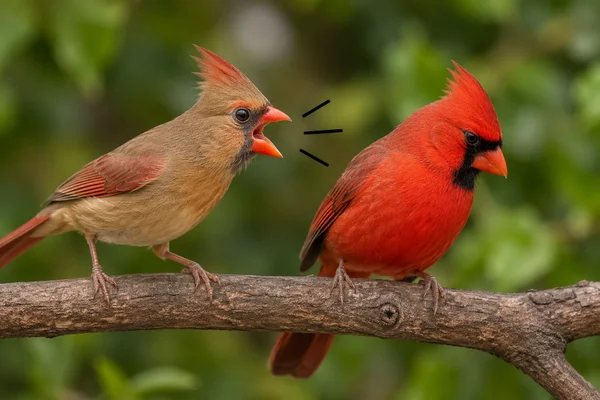
Conflict is part and parcel of the human experience. However, most people don’t engage in conflict healthily and productively. Some don’t even think that’s possible. Such contentious people with a proclivity for engaging in unhealthy conflict behaviors tend to:
- Increase the intensity of conflict
- Increase the frequency of conflict
- Decrease the chances of conflict resolution
While conflict can occur in any relationship, it’s pervasive in romantic relationships. Both men and women can be contentious, which means ‘likely to cause an argument’. Yet both common experience and research tell us that verbal aggression is the preferred mode of conflict for women.1Stockdale, L., Tackett, S., & Coyne, S. M. (2013). Sex differences in verbal aggression use in romantic relationships: a meta‐analytic study and review. Journal of Aggression, Conflict and Peace Research, 5(3), 167-178.
Women are more cautious than men about using physical aggression because they tend to be physically weaker and have to nurture even weaker offspring. So verbal aggression is a low-risk, indirect mode of aggression they deploy to protect themselves and their offspring.2Campbell, A. (1999). Staying alive: Evolution, culture, and women’s intrasexual aggression. Behavioral and brain sciences, 22(2), 203-214.
Signs
So a woman is more likely to be contentious because she’s a woman. This doesn’t mean all women are. Just as all men are not physically aggressive. But men are likely to be physically aggressive because they are men. In this way, physical aggression is essentially a male problem while verbal aggression is a female problem.3Soule, K. P. (2001). Persistence in compliance-gaining interactions: The role of nagging behavior. Northwestern University.
Few women do work on themselves and improve their behaviors. They may falter occasionally, but overall they show healthy conflict behaviors. So if you notice isolated incidents of one or more of the following signs, they’re not indicative of a contentious nature. If, however, you notice a consistent pattern of more than one of the following signs in a woman, she likely has a contentious or a high-conflict personality.
1. Entitlement
A woman who’s entitled expects huge favors while lacking consideration for her partner. There’s nothing wrong with having expectations. But thinking they should be met at all costs is entitled and selfish behavior. Sometimes a man may happily meet an expectation. Sometimes he may not want to be unable to. That triggers an entitled woman. This gives rise to conflict and phrases such as:
“You never listen to me.”
“You always ignore my needs.”
This type of always/never thinking is a cognitive bias. But since it’s emotion-driven, the emotions likely being anger and disappointment, logic flies out the window. All those times you did do things for her sit there on the shelf, overlooked and ignored, waiting for her to pick them up and shake off the dust that covers them. But she doesn’t.
2. Power-hungry
Humans like power. Power is all about ‘getting your way’. The way you meet your selfish needs is by having power. But healthy people understand that ‘having their way’, especially in ways that harm others, is not conducive to a good relationship. They actively choose genuine connection over power. They expect the same from others.
If the woman you’re with is unwilling to let go of power, she’s playing an entirely different game than you are. To you, the definition of a healthy and equal relationship is sharing power. To her, the concept of an equal relationship does not exist. Because women, unlike men, are generally unwilling to give up power in a relationship. In fact, they tend to see the relationships where they dominate as more stable and intimate.4Bay-Cheng, L. Y., Maguin, E., & Bruns, A. E. (2018). Who wears the pants: The implications of gender and power for youth heterosexual relationships. The Journal of Sex Research, 55(1), 7-20.
Now, if you’re a man who’s okay with letting a woman dominate, you may think it’s not a big deal. Society and social media might have convinced you it’s normal. It’s not. It’s an unhealthy dynamic. Over time, you’re likely to grow resentful and explode on her in uglier ways than men in other dynamics do.
Things power-hungry people do that lead to conflict:
- Emotional blackmail
- Emotional manipulation
- Disregarding boundaries
- Making decisions without consulting you (that affect you)
- Trying to win every time (win-lose mentality)
- Frequently interrupting and talking over people
3. Disrespect
We all want to be seen positively by others, especially by our significant others. It’s just how the brain is wired. A significant portion of our self-esteem as heterosexuals relies on how positively an attractive member of the opposite gender views us. In most cases, that’s our partner. If it weren’t this way, humans would have been okay with not reproducing. By connecting self-esteem with reproductive success, the mind does its best to ensure your genes get transferred to the next generation.
This is why disrespect, especially from an attractive person of the opposite gender, usually your partner, tends to land so hard. Your mind reacts as if all hell has broken loose. It convinces you that this is the worst thing that could happen to you. It tries to tank your self-esteem. You feel angry and may act aggressively toward your partner to regain a sense of power. You may lash out at them and disrespect them in turn. They’re the unworthy ones, not you.
If your woman is frequently disrespectful, she’s fishing for conflicts. She’s looking to trigger you. Power-hungry people like pushing buttons, pulling strings, and watching people react like puppets.
Ways in which disrespect shows up:
- Insulting
- Name-calling
- Frequent yelling
- Comparing you to other men
- Putting you down
- Harsh and excessive criticism
- Dehumanization
4. Dehumanization
Dehumanizing someone means stripping them of their humanity. When you imply that someone is ‘less than human’, you imply that they’re undeserving of basic human respect, decency and dignity. A common way this can show up in romantic relationships or marriages is when the woman sees her man as an ATM. She sees him as less than human: as a machine, a tool. When you’re seen like that, you’re bound to feel disrespected. Disrespect leads to defensiveness. Defensiveness leads to conflict.
5. Lack of empathy
A contentious woman is likely to be a narcissist, especially a covert narcissist. The signs significantly overlap. And narcissists are known to lack empathy. Those who lack empathy have a hard time understanding the mind of the other- their needs, opinions, emotions, and perspectives. They are only interested in their own mind and hold no space for the mind of the other. That can leave a partner feeling ignored, invisible, dismissed, and devalued, leading to conflict.
- Fight over minor things
- Have a strong desire to be right
- Lack accountability and responsibility (constant victim mentality)
- Use harsh language and personal attacks
- Enjoy proving others wrong (superiority needs)
- Perceive neutral comments as criticism and get triggered
Healthy conflict
Unfortunately, conflict in relationships is normalized. It is normal, yes, but it shouldn’t be normalized. When you normalize it, you breed a ‘this is how it is’ mentality. It makes you powerless. It stops you from examining the unhealthy conflict patterns and fixing them.
There are healthy relationships where people hardly fight, and if they do, they do so in healthy ways. For the most part, healthy conflict is unhealthy conflict minus the disrespect and rest of the above-mentioned signs. It is characterized by:
- Assertiveness
- Regarding boundaries
- Respectful disagreement
- Treating the other person like a human