As much as well-intentioned people try to create an equal society, it simply cannot happen. People organize themselves into status hierarchies wherever they are. Some people are more valuable and, therefore, higher in status than others.
What determines who is valuable/high status and who isn’t?
You and I don’t make these rules. It’s not up to governments, political parties, or judicial bodies to decide who’s high status and who isn’t. Thanks to millions of years of evolution, these rules have been passed down to us in our genes.
People who possess qualities that can enhance their chances of survival and reproductive success are valuable members of any society. A rising tide usually lifts all boats. Highly valuable members of a society are more likely to improve the odds of survival and reproduction of other members.
For example, a millionaire entrepreneur can employ hundreds of people and provide them with a means of livelihood. Hence, society values and gives high status to this person. And it happens unconsciously and automatically.
People don’t usually look at a successful person and go like:
“Okay, this guy has worked hard for his success. He’s benefiting not only himself but many others around him. Therefore, he’s a high-status person.”
No, they instantly see successful people as high status. Our ancestors needed to figure out who was high in status quickly. Because by associating with those people, they could gain essential benefits. They couldn’t afford to waste time thinking if the high-status people were self-made or not. Or how they got access to resources. It didn’t matter.
As a result, people today have become status-detecting machines. They can deduce the status of a person from minimal information. Sometimes, just by their looks. For instance, ‘if someone is well-dressed, they must be high-status’ is a judgment we all tend to make.
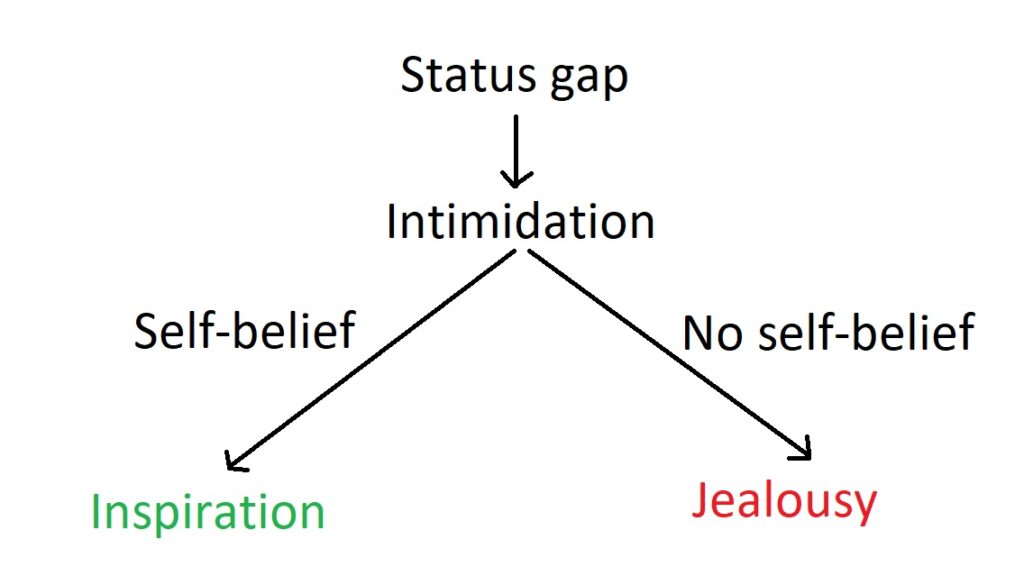
Status gap
If humans are status-detecting machines, they’ll inevitably compare their status with those they come across. People have a strong need to know where they lie in the status hierarchy of society. And the best way to do that is through social comparison.
When there’s a vast status gap between the observer and the observed, the observed being of higher status creates feelings of intimidation in the observer. The observer feels inferior, and their insecurities are awakened.
Why intimidation, though? Why not any other feeling?
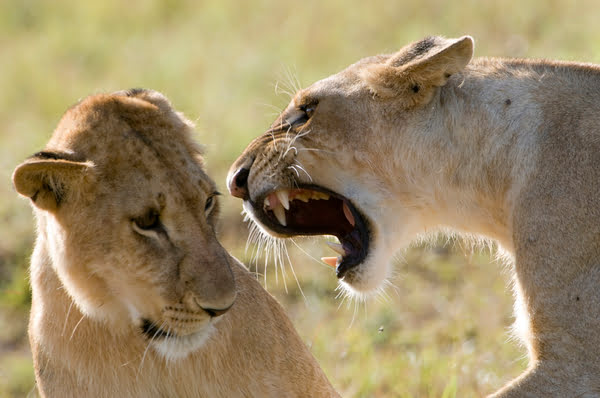
For a long time in human evolutionary history, status hierarchies have essentially been dominance hierarchies. As is true for most animals today, the way to rise in status is to exert dominance. Of course, when you’re dominating someone, you’re intimidating them. When they become timid, they’re more likely to comply and avoid conflict. The whole purpose of domination is to make others comply.
So, intimidation is a natural response to being dominated.
The thing is, in modern human societies, dominance can be exerted in a variety of ways. Hence, there are several ways in which humans feel intimidated. This article will later list almost all of those ways.
The critical thing to remember is that all dominance-intimidation human interactions revolve around survival and reproduction. When one human tries to dominate another, they’re essentially saying:
“I’m better at surviving and reproducing than you.”
Reasons you might be intimidating
The following list will help you understand why you’ve been, intentionally or unintentionally, intimidating people. I’ll briefly explain why each reason is intimidating.
1. You’re good-looking
Physical attractiveness is one of the strongest factors that help a person attract a mate and reproduce. Society values reproducing members more than non-reproducing members. Like a bacterial colony, a human society wants to expand so it can gain more resources and self-sustain. So, good looks equal high status.
Related: Signs someone is intimidated by your looks (Apply to other intimidation factors as well)
2. Successful
Success, in any shape or form, shows people you’re a competent person. You have the ability to accomplish your goals. Many people lack that ability. Success of any kind places you ‘above’ a lot of people.
3. Famous
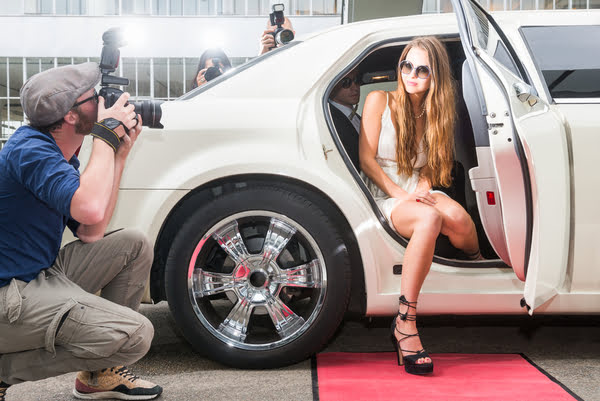
The more followers you have, the higher your status. If you’re loved and respected by many, you’re a celebrity. Perhaps celebrities are called ‘stars’ because they’re so high above the common folk, like stars in the sky. Think about how your friend might behave if you became a star overnight. They’ll likely feel intimidated and start to consider themselves as ‘beneath’ you making it hard for them to continue the friendship.
4. Strong
Physically as well as mentally. Displaying physical strength is the ancient, animalistic way to exert dominance. People can’t help but feel intimidated by big and physically strong people. Mental strength seems more attainable than physical strength. So, it tends to evoke more admiration than intimidation.
In evolutionary terms, physical and mental strength gave men more of an advantage than women so these traits are highly valued in men. If, as a man, you’re tall and have a large chest size you likely come across as intimidating.1McCarty, K., Leslie, C., Anguera de la Rosa, A., Saxton, T. K., & Cornelissen, P. L. (2025). Perceiving intimidation through kinematic cues in men’s gait. Scientific Reports, 15(1), 33489.
5. Intelligent
One way to display dominance is by showing intellectual superiority. In modern times, might isn’t always right. People can significantly raise their status and gain access to resources by being intelligent.
6. Wise
Wisdom is a rare quality and is only gained after years of experience. Being wise raises your status because people value wisdom. If you’re wise, people listen to you, and you can help many people.
7. Rich
When you’re rich, you have what people desperately need- access to resources. Since being resourceful helps men more with reproductive success than it helps women, men are more intimidated by rich men than by women.
8. Confident
Confident people are liked, admired, and respected. When people sense you’re more confident than them, intimidation is inevitable. When I say confidence I mean true confidence which is correlated with power and status. Confidence and feeling good about yourself goes hand in hand with high power and high status.2Keltner, D., Gruenfeld, D. H., & Anderson, C. (2003). Power, approach, and inhibition. Psychological review, 110(2), 265.
9. Independent
Independent people are more likely to become leaders. They don’t follow anyone. They get followers. Being an independent thinker attracts followers like bees to nectar. Humans have evolved to blindly follow high-status leaders. This likely ensured the survival enough for it to now be a part of our psychology.
10. Charismatic
Being charismatic is a common quality of successful leaders. Charisma comes down to the ability to genuinely express how you feel. Few people can pull that off. So, it’s a valuable trait to have. Almost all the cult leaders tend to be charismatic.
11. Knowledgeable
To figure out what traits and qualities society values, you sometimes have to look at how people devalue others. One way people do that is by saying something like:
“Oh! You know nothing.”
What they’re really saying is:
“Your lack of knowledge makes you low status. I can’t take you seriously.”
Knowledge is power, and power is status. Knowledge can help a person help themselves and others. In our modern knowledge-based economy, knowledge is more valuable than ever.
Similarly, if you use big words, you can come across as intimidating. You’re showing you know more and better words than them. Being a Grammar Nazi is another way to display intellectual dominance.
12. Positive personality traits
Positive personality traits like courage, altruism, honesty, decency, and modesty can also intimidate people. It sounds counter-intuitive because we’re taught to cultivate these traits all our lives.
It’s a rude awakening for many when they put in a lot of effort to develop these traits, only to find that they’re intimidating people with these traits. People are more concerned about their status than about pleasantness in others’ personalities.
13. Masculinity
A man with masculine traits threatens men who don’t have such characteristics. They’re better able to attract women and inspire other men. Tallness, broad shoulders, and a deep voice can trigger intimidation. So can masculine personality traits like ambition and aggression.
14. Femininity
More feminine women have more power than less feminine women. So, more feminine women have a higher status in society. They’re better able to attract men and inspire other women. A beautiful, feminine woman can intimidate women as well as men.
Masculine women can be intimidating, and not in a good way, for the same reason as feminine men are. They're too different and violate people's expectations of gender-appropriate behaviors.
15. Being too different
Feminine men and masculine women intimidate people because they’re too different from ordinary people.
People find strange and unfamiliar people and objects intimidating. This tendency is deep-rooted in humans and probably has its evolutionary roots in our reptilian brains. Reptiles use smell to detect genetically unrelated reptiles.3MacLean, P. D. (1990). The triune brain in evolution: Role in paleocerebral functions. Springer Science & Business Media.
We rely more on our visual systems to detect genetically unrelated people. This is the mechanics behind racism, nationalism, prejudice, and discrimination:
“People who’re not like us are unrelated to us and therefore a threat.”
This applies not only to looks but also to personality. If you have a unique personality, people get intimidated and have a hard time thinking about you as one of them.
16. Healthy
The most important thing for your survival is your health. If you’re in shape and eat healthy, you can intimidate others. First, you’re doing something they want to do but won’t or can’t. Second, health-conscious people are rare in our society, to the point that they come across as strange. People say, “He’s health conscious” as if not being health conscious is the normal, sane thing to do.
17. Social life
We’re social species and crave human companionship. Some more than the others. But we all do. Having strong social support may not be as critical for survival in modern times but it was in ancestral times. Therefore, it’s still important for our well-being and confers status. If you have a decent social life, it can intimidate those who don’t.
Related: Attachment style test
18. Hobbies
How dare you take the time to enjoy hobbies? How dare you take time out for yourself and your mental health?
Many people don’t pay attention to their physical health, let alone mental health. They’re overworked and overstressed. They wish they could develop a hobby too, but they don’t make time for it. Worse, they get intimidated by those who do. Like no one’s stopping you.
19. Travel
People use traveling as a way to display status. It’s becoming increasingly common thanks to the proliferation of photo and video-sharing social media platforms. The weird thing about using travel as a status display is that the further you travel from your hometown, the higher your status.
You could have a wonderful location 5 miles from your home with everything you need to relax. But no, that’s not worth showing off. What’s worth showing off are far-away and exotic locations. When you travel to faraway locations, you’re indirectly showing that you have a lot of resources (money and time) to spend, so it’s a higher-status thing to do.
20. Opinions
Expressing opinions is a high power behaviour because it shows you value your opinions enough to express them. You expect others to value them too, while having the courage to risk disapproval. As a general rule, expression is a high power behavior and lack of expression is a low-power behavior.4Morrison, E. W., & Rothman, N. B. (2009). Silence and the dynamics of power. Voice and silence in organizations, 6(5), 111-134.
When people say, “He was dumbstruck” they don’t say that in an admiring way. Phrases like “He could barely muster enough courage to say a word” show talking/expression is an inherently high-power behavior.
When you don’t mean to intimidate
People who don’t understand what we’ve been discussing so far are often confused when they realize they’ve been intimidating others:
“But I wasn’t trying to intimidate him.”
That’s the thing about intimidation: You don’t have to actively intimidate others, even though you can (e.g. showing off). People get intimidated automatically when they notice a huge status gap between them and you- when they deem you better than them in an evolutionarily important area.
For instance, when you become successful, you may want to share the good news with family and friends. You think that, being your well-wishers, they’d rejoice in your victories. You’re unaware or forget that they’re status-detecting machines. Anything you do that makes them look bad compared to you will intimidate them.
When people show off, they’re deliberately trying to intimidate others. Internally, they’re like:
“Hey! Look! I’m better than you. Haha.”
This gives them a rush- a feeling of being powerful. It makes them feel superior. Like they’ve crushed other people.
And yes, other people do feel crushed.5Muller, D., & Fayant, M. P. (2010). On being exposed to superior others: Consequences of self‐threatening upward social comparisons. Social and Personality Psychology Compass, 4(8), 621-634. Feeling inferior is one of the worst feelings one can experience. This is why many well-meaning people advise avoiding social media, which is a hub for status displays.
While you may get a kick by making others feel inferior, you have to realize that by doing so you’re also alienating them. You’re highlighting the status gap between you and them. You’re communicating:
“We’re not equals.”
This is why people don’t like braggarts and tend to stay away from them. No one wants to feel intimidated constantly.
Intimidation and admiration go hand in hand
You have to admire someone to feel intimidated by them. Give me a list of all the admirable qualities you have, and it will be a list of all the ways you intimidate people. Intimidation turns to inspiration when people believe they too can become admirable. Intimidation turns to jealousy when people don’t believe they too can become admirable.