Category: Social skills

Improve your relationships with people in your inner and outer circles.

  • When every conversation turns into an argument

    When every conversation turns into an argument

    It’s frustrating when every conversation with your loved one turns into an argument. When you’re done arguing and finally get the time to reflect on what happened, you’re like:

    “We fight over such minor and silly things!”

    Arguing once in a while is typical for relationships, but when every conversation turns into an argument- when it becomes a repetitive pattern- things start to get serious.

    In this article, I’ll attempt to deconstruct the dynamics of arguments in relationships so you can have a clear idea about what’s going on. Later, I’ll discuss some strategies to deal with arguments that you can try the next time you argue with a loved one.

    I’ll also give you the best lines to end arguments that you can use when you have no clue what’s going on.

    Why it happens

    You could be talking about the most random topic with your loved one, and before you know it, you’re in the middle of an argument.

    All arguments follow the same process:

    1. You say or do something that triggers them
    2. They say or do something to trigger you
    3. You trigger them back

    I call this the cycle of hurt. Once your partner feels hurt by something you say or do, they hurt you back. Defense is a natural reaction to being attacked. And the best way to defend is to attack back.

    For instance, you say something disrespectful to them. They feel hurt and withdraw their affection as a punishment. They don’t pick up your call, let’s say.

    You sense that they didn’t pick up your call deliberately and get hurt. So next time, you don’t pick up their call either.

    You can see how this vicious cycle self-perpetuates once activated. It becomes a chain reaction of hurt.
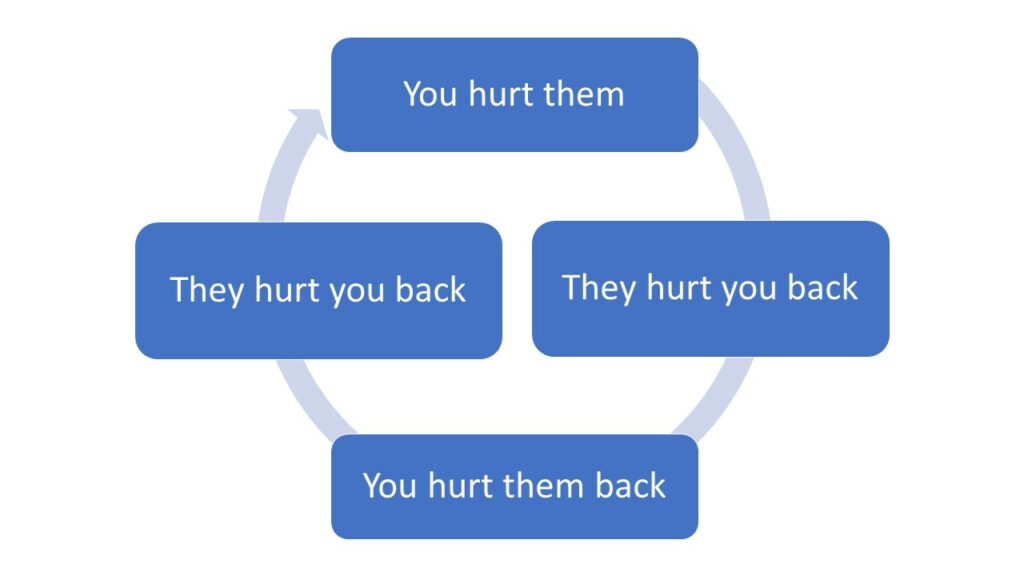
    cycle of hurt
    The cycle of hurt in close relationships.

    Let’s go back to the start. Let’s deconstruct what starts arguments in the first place.

    There are two possibilities:

    1. One partner intentionally hurts the other partner
    2. One partner unintentionally hurts the other partner

    If you intentionally hurt your partner, don’t be surprised if it activates the cycle of hurt. You can’t hurt your loved ones and expect them to be okay with it. Deep down, you know you messed up and are likely to apologize.

    Partners will rarely start an argument by intentionally hurting each other, though. Intentional hurting occurs more once the cycle of hurt has been activated unintentionally.

    What starts most arguments is the second possibility- one partner unintentionally hurts the other partner.

    When this happens, the hurt partner accuses the other partner of intentionally hurting them, which isn’t true. Being falsely accused deeply hurts the accused partner, and they hurt the accusing partner back, this time intentionally.

    We know what happens next- blaming, yelling, criticizing, stonewalling, and so on. All the things that make a relationship toxic.

    What happens when you hurt them unintentionally?

    Now, let’s dig into why someone misinterprets neutral words and actions as intentional attacks:

    1. The closer the relationship, the more you care

    Humans are wired to value their close relationships. After all, their intimate relationships help them the most to survive and thrive.

    The more we care about maintaining a good relationship with someone, the more upset we get if we sense the other person doesn’t care about us. This makes us see relationship threats where there are none.

    The mind’s like:

    “I’m going to eliminate every possible threat to this relationship.”

    In its desperation to preserve the relationship and defend against threats, it sees threats where they are none, so it doesn’t take any chances, and every possible threat is destroyed.

    This ‘better be safe than sorry’ approach is deeply rooted in our psyche.

    2. Poor communication skills

    People communicate differently. How you communicate is primarily influenced by the people you hang around with.

    Most of us learned to talk in the presence of our parents. We picked up how they communicated and made it a part of our communication style.

    This is why people tend to talk like their parents.

    If being blunt was the norm in your household while your partner comes from a more polite family, then your being blunt will get misperceived as rudeness.

    Any aggressive communication style that makes the other person feel attacked is poor. It’s often more about how you say things than what you say.

    3. Inferiority complex

    People who feel inferior are always in defensive mode. They’re so afraid that others will know how inferior they are they feel compelled to show their superiority when they can. Freud called it reaction formation.

    I’ve had a friend who always tried to prove to me how smart he was. He was smart, but his constant showing off started to irritate me. I couldn’t have a proper discussion with him.

    Anything we talked about inevitably took the turn of “I’m smarter than you. You know nothing”. It was clear that instead of listening and processing what I had to say, he was more into flaunting his smartness.

    One day, I’d had enough and confronted him. I hurt him back with my smartness, and it ticked him off. We haven’t talked since. I guess I gave him the taste of his own medicine.

    Inferiority is triggered by upward social comparison– when you encounter someone better than you at something you value.

    I was watching an interview of a super successful person in our industry. The interview was taken by a guy who wasn’t as successful as the interviewee. You could cut the inferiority complex in the room with a knife.

    The interviewer was less interested in what the interviewee had to say and more interested in showing the audience that he was on par with the interviewee.

    Because those who feel inferior have something to hide and prove, they easily misperceive neutral actions and words as personal attacks. Then they defend themselves to mask their inferiority.

    4. High-conflict personalities

    High-conflict personalities are prone to conflicts and seem to thrive on them. They develop a reputation for being quarrelsome. Since these people are actively looking to get into disputes, they don’t miss a chance to misperceive neutral actions or words as attacks- just so they can fight.

    5. Displacing negative emotions

    People often argue over minor and stupid things because they have other problems not related to the relationship.

    For instance, a person may be stressed at a job, or their parent may be ill.

    These adverse circumstances lead to negative emotions that seek expression. The person is looking for a reason to vent.

    So, they pick a minor thing, misperceive it as an attack, and vent on their partner. Relationship partners often become punching bags for each other in this way.

    6. Past resentments

    Unresolved relationship issues lead to resentment. Ideally, one shouldn’t move forward in a relationship before past issues are resolved.

    If your partner brings up your past mistakes during a fight, it means they haven’t resolved the issue. They’ll continue using that resentment as a weapon against you.

    If you already resent your partner, it’s easy to misperceive neutral things as attacks and unleash the beast of your past resentments on your partner.

    What to do?

    Now that you have some insights about what goes on during arguments, let’s discuss the tactics you can use to prevent turning conversations into arguments:

    1. Take a break

    When the cycle of hurt is activated, you’re both angry and hurt. Anger throws us into ‘defend/attack’ or ‘flight-or-flight’ mode. Anything that you say during this emotional state isn’t going to be pleasant.

    So, you need to stop the cycle before it perpetuates by taking a break. No matter who hurt whom first, it’s always up to you to take a step back and de-activate the cycle of hurt. After all, it takes two to quarrel.

    2. Work on your communication skills

    You may be unintentionally hurting your loved ones by the way you speak. If you’re blunt, tone down your bluntness with people who can’t take it well. Work on being an active listener and strive to talk politely.

    These things are simple but very effective. Changing your communication style from aggressive to non-aggressive could be all you need to do to avoid relationship problems.

    If your partner has poor communication skills, help them by letting them know how they speak affects you.

    3. Their feelings are just as important as yours

    Say you get unfairly accused by your partner of hurting them. You’re mad, okay, but why hurt them back and prove them right?

    Acknowledge that something you did triggered your partner, even if you didn’t mean to. Validate their feelings first before you explain your stance.

    Instead of using an accusatory tone and saying:

    “What the hell? I didn’t mean to hurt you. Why are you taking it personally?”

    Say:

    “I’m sorry you feel that way. I seem to have unintentionally triggered you. Let’s explore what happened here.”

    4. See things from their perspective

    To validate their feelings, you need to see things from their perspective. We humans have a hard time seeing things from other people’s perspectives.

    If you can see where they’re coming from, you’ll be able to empathize with them. You’ll no longer feel the need to fight and win the argument. You’ll look for ways to accommodate their needs and seek a win-win.

    Just because you acknowledge their perspective doesn’t mean your perspective is less important. It’s not a “me vs. them”. It’s “understanding each other vs. not understanding each other”.

    5. Don’t make your partner your punching bag

    If you’re struggling in a life area, seek support from your partner instead of making them your punching bag. Instead of turning every conversation into an argument, talk about your problems and seek to resolve them.

    Venting may make you feel better temporarily, but it doesn’t lead to a solution, and you end up hurting those around you.

    Discussions vs. arguments

    When exactly does a conversation turn into an argument?

    It’s an interesting phenomenon. Since humans are emotional creatures, you really can’t expect them to have civilized and rational discussions.

    I’ve had to come to terms with the fact that almost all discussions with people are doomed to turn into arguments. It’s rare that you’ll find a person with whom you can discuss anything without it turning into a fight.

    Avoid discussions with argumentative people if you don’t want to turn every conversation into an argument. Find people who’re open to new ideas and can discuss things calmly.

    Contrary to popular belief, you can have a heated discussion without it turning into an argument. The heat can come from your passion for the topic or your convictions. A heated discussion turns into an argument only when you veer off the topic and make personal attacks.

    Best lines to end an argument

    Sometimes you want to end an argument even if you don’t understand what’s going on. Arguments are a colossal waste of time and spoil relationships. The fewer arguments you get into, the better your overall quality of life will be.

    Ideally, you want to develop the skill of seeing arguments in the seed before they sprout. It could be a random hurtful comment from someone or a conversation that increasingly takes a hostile turn.

    When you sense an argument brewing, step back from it by using these lines:

    1. “I understand what you mean”

    Most arguments are fueled by the sense of being unheard or taken for granted. When people get taken for granted, they make their position stronger.

    2. “I’m sorry you feel that way”

    Even if you didn’t intentionally hurt them, this statement validates their feelings. They’re hurt that you hurt them. That’s their reality. You need to acknowledge their reality first and explore later. 

    3. “I see where you’re coming from”

    You can use this sentence to help them gain insight into themselves in a non-aggressive manner.

    4. “Tell me more”

    This magical sentence kills three birds with one stone. It:

    • taps into their need to feel heard
    • gives them a chance to vent
    • helps in exploring the issue

    5. “You have a point”

    Nothing can calm an argumentative person more than acknowledging their complaints. After you’ve calmed them down, you can explore the issue further and explain your stance.

  • How to get over phone anxiety (5 Tips)

    How to get over phone anxiety (5 Tips)

    Phone anxiety or telephobia is when you want to make or attend a phone call, but fear stops you from doing it. You know that the call is important to you, but you get so nervous that you try to talk yourself out of doing it.

    People who don’t like talking on the phone usually have phone anxiety. This anxiety is an extension of their social anxiety. They have problems interacting with people in general.

    At the same time, some people just don’t like talking on the phone. Not due to anxiety but other reasons such as phone calls taking up too much time.

    Also, some people don’t have social anxiety- they’re okay with in-person interactions- but phone calls can get their hearts racing.

    This is why it’s essential to realize that you can only say that you have phone anxiety when, deep down, you want to make or attend that call but are afraid of doing it.

    Needless to say, being afraid of making or attending calls can be detrimental to your professional and personal life. While most jobs no longer require you to call nowadays, many customer-facing jobs (like Sales) still require that you get good with phone calls.

    Phone anxiety symptoms

    If you still have doubts about whether or not you have phone anxiety, the following symptoms of phone anxiety should clarify things:

    • Extreme fear before, during, and after the phone call
    • Doing what you can to avoid phone calls
    • Delaying making or attending phone calls
    • Over-analyzing the call after the call
    • Being afraid the call won’t go well
    • Worrying about bothering the other person
    • Worrying about saying the wrong things
    • Experiencing physical symptoms of anxiety like increased heart rate and shaking
    • Being self-conscious during the call
    • Your loved ones complaining that you never call them

    What causes the phobia of phone calls?

    To answer this question, we need to look at how telephonic communication differs from other modes of communication, especially texting and face-face interaction. Email is delayed texting.

    Unlike texting and face-face interaction, phone conversations require that you think on your feet. Texting gives you time to craft the perfect text. You can even ask your friends to provide you with feedback on the text.

    You don’t have that luxury in calling. Phone calls immediately put you on the spot. If you were to pause to craft the right thing to say, the other person would find it hard to make sense of the pause. Pauses make phone conversations awkward.

    But phone conversations are more intimate than texts. You feel more connected to the person whose voice you’re hearing.

    Still, phone calls aren’t as intimate as face-to-face interactions. Phone calls allow you to pick up on paralanguage- the manner of speaking- which conveys a lot in addition to words. But a lot is still left out that can only be accessed during in-person interactions.

    So, phone calls put you in this weird spot between texting and in-person communication. You feel intimate, but there’s a ton of nonverbal communication that you miss out on.

    When we interact with others, we pay attention to their feedback to gauge how the interaction is going. The other person’s nonverbal feedback allows us to read their emotions and course-correct.

    Phone calls deprive you of all this crucial information, and your fear that you might be bothering the other person or that the call isn’t going well exacerbates.

    Phone anxiety may get worse when you’re in a public place. Sounds that we can’t make sense of are effective in drawing our attention. When people hear you talking on the phone, they only get to hear one side of the communication.

    Our minds like to fill in the gaps. This makes them pay more attention to you than they would to regular two-sided interaction. Their brains can’t help but try to figure out the other side of the communication.

    You know this, and it makes you even more afraid to make phone calls in public.

    How to get over phone anxiety

    At the root of phone anxiety- and social anxiety in general- is the fear of being evaluated negatively. Also, you don’t want to mess up because the call is important to you.

    This is why phone anxiety may only show up when you have to attend a high-stakes call. Be it a call for a job interview or the first call with your crush.

    All novel experiences tend to induce slight anxiety in us, but high-stakes novel experiences where mistakes can be costly are breeding grounds for anxiety. When messing up has the highest potential to ruin your life, that’s when you’re most afraid to mess up.

    Ironically, the fear of messing up often makes people mess up.

    Phone anxiety can be effectively dealt with using the following techniques:

    1. Strive to be rational

    Your high-stakes phone call induces extreme fear in you, which makes you distort reality to fit that fear. You become worried that you’ll mess things up. You recall incidences from your life where you messed up similar situations in the past.

    You’re trying to weave a narrative to feed your fear.

    Take a step back and think more rationally. Some good questions to ask yourself are:

    • “Have I always messed up similar situations in the past?”
    • “What are some examples where my first call with someone went well?”
    • “What’s the worse that can happen if I mess up?”
    • “Will I be done for if I mess up, or can I still remedy things?”
    • “Am I being a perfectionist?”

    Having healthy beliefs about failure can help significantly. Even if you mess up the phone call, the world will probably not end. You’ll get more opportunities to make things right.

    Having a healthy belief about anxiety will help even more. Realize that it’s natural to feel some fear when you’re doing something new. When you let anxiety be and quit fighting it, it comes and goes like a guest in a hurry.

    2. Make more phone calls

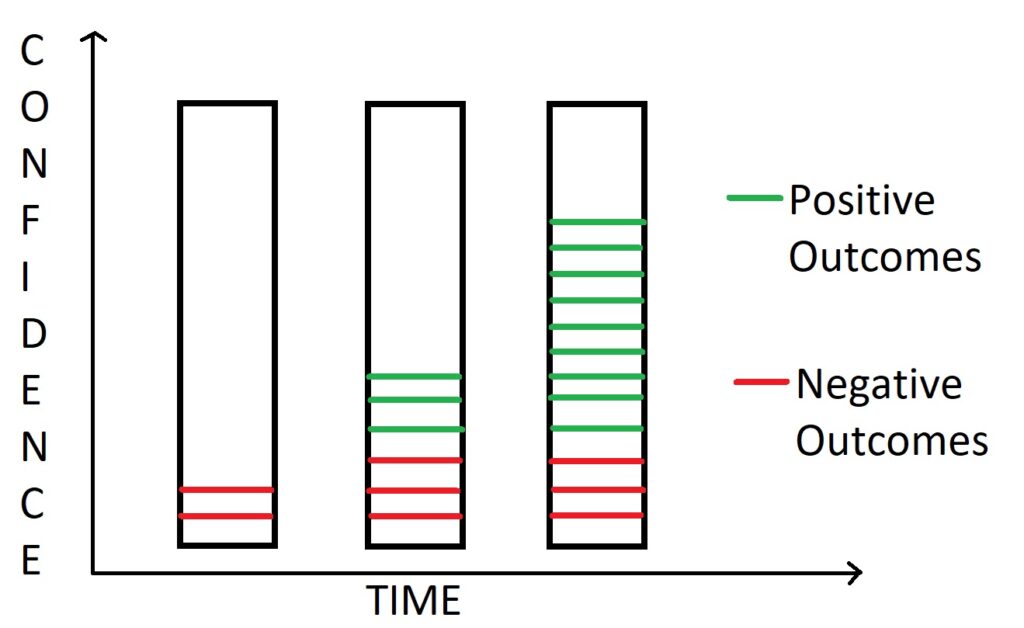
    We feel so anxious while trying new things because we have little or no deposits in what I call our confidence bank account.

    We all have a confidence bank account for each of our skills. The more deposits you have in an account, the more skilled you are. What are these deposits, you ask?

    These deposits are reps with positive outcomes. The more you do something successfully, the larger your confidence bank account for that skill grows.

    Of course, the first deposit will be small and will probably yield a negative outcome (failure). But as you keep trying and depositing, your deposits become better.

    So, the way to get good at phone calls (and everything else) is to do it repeatedly.

    Since many people prefer texting over calling these days, their ‘calling confidence bank account’ is lacking. They don’t have a lot of experience taking on the phone. The way to remedy it is to expose yourself to more phone calls.

    confidence deposits
    Positive outcome deposits overshadow negative ones over time, building confidence.

    3. Preparation

    Anxiety is nothing but a message from your mind that you’re unprepared for an important upcoming event. You’re unprepared because you’re not confident. You’re not confident because your confidence bank account is lacking.

    You want more deposits, but you don’t have much time. What do you do?

    After all, it takes months or years to obtain sufficient positive outcome deposits. But there’s a way to short-cut this process, a way to trick your mind into being more confident about something where it lacks deposits.

    That trick is preparation.

    Preparation and practice are nothing but making continuous deposits into your confidence bank account.

    By rehearsing how you’ll speak during the phone call over and over, you eventually convince your mind that you have enough positive outcome deposits to go for it.

    4. Reframe the situation as a chance to learn

    Sure, by not making the phone call, you’ll stay in your comfort zone. But what are the costs of that?

    Avoiding the call altogether may be detrimental to your personal or professional life. It’s likely to be worse than calling and messing it up. Your deposit will remain at the same low or zero level.

    If you make the call and mess up, at least you deposited something in your confidence bank account. You’ll learn a ton and make better deposits in the future. Avoiding the experience altogether is missing a chance to make a deposit.

    5. Focus on the other person

    Before the call, intend to focus more on the other person. Anxiety forces us into this ‘self-monitoring mode’ where we obsessively focus on ourselves to avoid making mistakes.

    But if you decide to see this situation as a chance to learn, you’ll maximize your learning if you focus more on the other person. Listen to what they have to say and pay attention to how they respond to you.

    The more you focus on them, the more likely you will pay attention to their needs. They’ll feel understood, and the communication will go well.

    Sometimes you can’t fool your mind

    If you lack proper communication skills, you can’t fool your brain into thinking that you’ll do well. Preparation can help, but you need to put in the reps and make those actual deposits.

    Also, if you’re likely to bother the other person, you can’t fool your brain into thinking that you won’t bother them. For instance, most people don’t like getting cold-called.

    So, if you’re in Sales or Marketing and cold-calling is your marketing strategy, maybe your anxiety about bothering people is justified and you should try a different marketing approach.

  • How to make someone laugh (10 Tactics)

    How to make someone laugh (10 Tactics)

    Laughter is not only the best medicine but also a great way to raise your status in society. When you make people laugh, you make them feel good. This makes them perceive you as a valuable member of society, and your self-esteem rises.

    So, it makes sense to want to learn how to make someone laugh, especially in present times.

    As stress continues to become a normal part of the human condition these days, people are increasingly looking for ways to cope. Laughter is a healthy way to cope with stress. It improves physical and mental health.

    In this article, we’ll discuss why people laugh- the theories behind it and then we’ll move on to the specific tactics to make people laugh. When you have a deep, theoretical understanding of laughter, you can make people laugh in your own creative ways instead of just relying on specific tactics.

    That said, we’ll also briefly discuss why the tactics work in light of the theories.

    Theories of laughter

    1. Harmless shock

    Laughter almost always occurs when people experience what I call ‘a harmless shock’. Laughter comes down to pattern-breaking. When you break someone’s pattern of perceiving reality, you violate their expectations and shock them. When this shock is harmless to them, they laugh.

    Our brains are wired to notice changes in patterns. In ancestral times, a change in a pattern usually meant there was a threat in the environment. The sound of a twig breaking in the bushes, hearing footsteps and growls at night, probably meant that a predator was nearby.

    Therefore, we’re wired to pay attention to a disruption in our patterns. Such shocking events create tension in us and frighten our brains. When we learn that the shocking thing is actually harmless, we laugh to release that tension.

    2. Superiority theory

    Another closely related theory of laughter that makes sense is the superiority theory. According to this theory, laughter equals winning. Just as we scream when we’re victorious in a contest, laughter is a way of expressing victory over someone or something.

    A joke is like a game. In a game, there’s this initial phase in which tension builds up. The greater the tension and conflict, the more you scream with joy upon being victorious.

    Similarly, in many jokes, there’s this initial phase where the setup or groundwork of the joke is laid. This increases tension, which is then relieved via the punchline. The greater the tension, the harder you laugh to release that tension.

    As Charles Gruner, author of The Game of Humor, says in his book:

    “When we find humor in something, we laugh at the misfortune, clumsiness, stupidity, moral or cultural defect, suddenly revealed in someone else, to whom we instantly we feel superior since we’re not, at that moment, unfortunate, clumsy, stupid, morally or culturally defective.”

    – Charles R. Gruner

    While jokes seem all fun and games, they actually reveal the dark side of human nature. The side of human nature that rejoices upon the misfortune of others and basks in sudden superiority.

    People find different things funny

    While there are some things that people find universally funny, there are also things that only some people find funny. Some jokes require a certain level of intelligence for people to get.

    So, when you’re trying to make someone laugh, it helps to know what kind of humor they’re into. Many people aren’t self-aware enough to tell you what things they find funny. You may have to find that out yourself. You do that by throwing all kinds of jokes at them and seeing what they respond to.

    Once, a good friend of mine recommended a TV show called South Park to me, saying it was hilarious and satirical. I like satire, but I don’t like toilet humor. There was a lot of the latter in the show, and I just couldn’t stand it. I also don’t enjoy slapstick and adult humor. I mean, those jokes have to be really, really funny to break out a chuckle from me.

    I’m more into smart and creative humor like sarcasm, irony, puns, and satire.

    The point is, you’ll have to work a lot harder to make me laugh if you don’t make jokes that are in line with my preferred type of humor.

    How to make someone laugh

    Now let’s look at some of the specific tactics to make people laugh that are in line with the theories of laughter.

    1. Funny stories

    Funny stories have a setup that builds tension and a punchline that resolves the tension. The skill lies in setting up the setup and building the tension. The more effective you’re in doing that, the more effective your punchline will be.

    One of the best examples of effective tension-building I’ve ever seen was in the 2005 movie Cache. Watch the clip from the beginning to 2 minutes 22 seconds:

    Imagine if the speaker had magically turned into a dog at the punchline. The ‘harmless’ part of the ‘harmless shock’ would’ve gotten removed, and the people would’ve screamed in fear and shock, not in laughter.

    2. Sarcasm and irony

    Sarcasm is saying the opposite of what’s true. Sarcasm and irony need to be accompanied by a sarcastic tone or facial expression (rolling eyes) for people to get it, or it gets taken literally.

    When you’re being sarcastic, you point out the stupidity in people. This makes you and the onlookers feel momentarily superior to the object of sarcasm. Sarcasm can thus be offensive to the object of sarcasm. Only use sarcasm if you know they can take it or would find it equally amusing.

    Irony is saying or showing people something that is contradictory. The contradiction shocks the brain harmlessly. Here’s an example of irony:

    fb pun

    3. Puns and witty remarks

    A pun is a joke that exploits different meanings of a word or a phrase or the fact that different words are similar-sounding but with different meanings. Here are some examples of puns:

    “My niece calls me ankle; I call her knees. Ours is a joint family.”

    “I’m a big fan of whiteboards. I find them quite re-markable.”

    And here are some of my own (Yes, I’m proud of them):

    “I’m firing my massage therapist because he rubs me the wrong way.”

    “A guy invited me to play soccer. I said I don’t know how to shoot, so I’ll pass.”

    “A farmer I know is too afraid of growing fruits. Seriously, he needs to grow a pear.”

    At first glance, puns and witty remarks may seem to have nothing to do with sudden superiority. But remember, the superiority theory of humor says we laugh we when feel superior to someone or something.

    Puns tend to follow the typical structure of a joke. First, groundwork is laid for the pun to provide context and build tension. Sometimes the word or phrase used in the pun itself creates tension in your mind because it has multiple meanings.

    When you realize that the punster intentionally created the double-meaning situation, the tension is relieved, and laughter ensues.

    4. Understatements

    You use an understatement by making something big appear smaller or making something serious appear less serious. This creates a comedic effect because you’re breaking pattern. You’re presenting familiar things in an unfamiliar way.

    Say there’s a hurricane in your area, and you say something like:

    “At least the plants will get watered.”

    It’s funny because no one sees a natural disaster like that.

    5. Exaggerations

    Also called hyperbole, these are the opposite of understatements. You make something bigger than it actually is or more serious than it really is. Again, these break people’s patterns, presenting the familiar in an unfamiliar manner.

    Once, my mother went on a picnic with some of our relatives. When they were about to eat, my aunt and her kids grabbed the biscuit bags- without asking others first- and began eating them.

    My mother had an excellent way to describe this behavior. She said:

    “They had their heads in the bags.”

    This line had me rolling, and I wondered why I found it so hilarious.

    Of course, they didn’t have their heads in the bags, but saying it this way communicates your disappointment at their cattle-like behavior. It paints a vivid yet deplorable picture of the behavior in your mind. You’re superior, and they’re inferior. You can laugh at them.

    6. Callbacks

    This is an advanced technique that is often used by professional comedians. You say X to someone, which creates a shared context between you two. Later in the conversation, you refer to X. Your referring to X is unexpected and breaks pattern.

    When people refer to the movies or shows they’ve watched, they’re using callback humor.

    Say your name is John, and you’re eating with a friend. They ask for some of your food, and you’re like: ‘John doesn’t share food’. Your friend won’t laugh if they haven’t seen Friends.

    7. Relatable truths

    What makes relatable jokes funny?

    Sometimes, a comedic effect can be achieved merely by observing things as they are with no additional layer of sarcasm or irony. When someone tells you a relatable truth, you laugh because nobody verbalized that observation before. This violates your expectations.

    Others probably experienced the same situations, but they didn’t think of sharing or describing it. So, mere sharing or describing a situation that isn’t normally shared or described makes it unexpected and humorous.

    8. Injecting novelty into things

    You can make anything funny by injecting some sort of novelty into it. Something that violates the expectations of your audience. For this, you have to know what they expect and then defy their expectations.

    You don’t need any of the above-mentioned tactics to do it. You can inject novelty into a situation simply by saying something ridiculous or impossible.

    Say it’s raining heavily, and someone asks you how heavy the rain is. You say:

    “I think I saw an ark pass by with animals.”

    Of course, it also uses callback. Those not familiar with the biblical story will only get confused by that reply.

    9. Doing impressions

    When you do impressions of a celebrity, people find it funny because they only expect the celebrity to behave that way. When comedians do impressions on others, they also tend to make fun of those they’re imitating. This adds a layer of superiority to the joke to make it funnier.

    10. Slapstick humor

    We can not only violate expectations with words but also with actions. This is where slapstick comedy, practical jokes, antics, and pranks come in. There’s a lot of such stuff on social media, and people seem to love it.

    A lot of slapstick humor consists of people falling or slipping. Seeing someone else in an inferior position like that makes people laugh, lending credence to the superiority theory.

    Charlie Chaplin’s stuff and the funny movies of Robin Williams fall under this category of humor.

    A note on self-deprecating humor

    You may have noticed that I didn’t include self-deprecating humor in the above list. There’s a reason for that. Self-deprecating humor, i.e., humor where you make fun of yourself, can be tricky.

    It works because it puts you in an inferior position and makes the listener feel superior. Also, people making fun of themselves is unexpected.

    However, the risk of putting yourself down is that people respect you less. Self-deprecating humor can only work in certain situations.

    Here’s a simple matrix that shows when you can use self-deprecating humor and when you can put others down:

    harm matrix

    As you can see, self-deprecating humor is only advisable when others already know you’re a high-status person, i.e., when they already have a high level of respect for you. You may even come across as humble or a good sport in such cases.

    However, if you’re not already high status, you risk losing the respect of others if you attempt self-deprecating humor. If you’re unsure about your social standing, use self-deprecating humor sparingly.

    You can freely make fun of other high-status people, though. You have nothing to lose. The people you’re making fun of are those that your audience envies and loves feeling superior to (aka celebrities).

    Lastly, avoid making fun of low-status people as much as possible. People who’re poor, sick, or unfortunate in some way. You come across as insensitive.

    If you make fun of the victims of a recent earthquake, people will say, “Too soon!” even if they feel like laughing because of the sudden superiority (they’re fortunate in comparison).

    Still, they realize it’s insensitive to make such a joke at such an early stage when the ‘unfortunate ones’ are still healing their wounds. As time passes and it’s no longer ‘too soon’, you’re sort of allowed to make fun of them.

    Final words

    Humor is a skill like any other. If you believe some people are naturally funny and you’re not, you won’t even try. Like any skill, you’ll probably fail at first many times before you get good at it. It’s a numbers game.

    You have to risk throwing jokes out there and not be bothered if they fall flat. One great joke can make up for 10 bad ones, but you have to be willing to make the bad ones first to get to the good one.

  • How to stop being nosy

    How to stop being nosy

    Humans are social species hard-wired to care about the business of other humans in their social circles. It’s what made us tick for thousands of years. An unwanted consequence of this tendency is nosiness.

    I have done a separate piece on what makes people nosy that you might want to check out.

    Long story short, nosiness allows people to collect important information about others. They use that information to compare themselves to others, get an idea of their own social standing and find out how reproductively successful others are.

    Humans evolved in tightly knit, genetically related groups in which the group members highly depended on each other for their survival and reproductive success. As human society progressed, the groups became larger and larger.

    The result being that an individual today comes into contact with many people (in real life, and more so on social media). Most of these people don’t belong to their ‘tribe’. Yet, their tribal tendency to poke their nose into another tribe member’s affairs remains.

    So, they end up interfering in the affairs of people that don’t actually belong to whatever they consider their tribe.

    Closeness and information sharing

    How much information a person reveals about themselves is proportional to their closeness to the receiver of that information.

    Imagine there are concentric circles of closeness around each person. People who belong to the inner circles or zones have access to more personal information about the person whereas people belonging to the outer circles enjoy little access.

    Every person you come across either belongs to the:

    1. Stranger zone

    People falling in this zone have little or no access to your personal information. Nosiness from such people can be the worst and may even turn you aggressive.

    2. Acquaintance zone

    Those in this zone know you and you know them. There’s minimal exchange of personal information. Nosiness from people who belong to this zone is also unacceptable.

    3. Friendship zone

    A lot of personal information is mutually shared in this zone. Still, some important personal matters are also kept secret. We rarely accuse these people of being nosy.

    4. Relationship zone

    People belonging to this zone are people who’re the closest to you. They have access to most of your personal information. They’re only deprived of the contents of your mind that you’ve never shared. These people are almost never accused of being nosy unless they find a way to peek into your mind.

    zones of closeness

    How the closeness zones work

    When we share our personal information with someone, we do that based on how close we think they are to us or how close we want them to be.

    For instance, when you’re trying to convert a friend into a lover, you do that by sharing more personal information with them. You also encourage them to share more personal information so that it becomes a mutual thing.

    This way, you pull them from the friendship zone into the relationship zone. This mutuality is what keeps a person in a particular zone.

    For a person to stay in a zone, the personal information they share with you has to be balanced by the proportionate personal information you share with them.

    If either you or them withdraw from sharing personal information, they move to the outer zones. If you both increase the amount of shared personal information, they move into the inner zones.

    When they expect you to share more personal information than you should based on the zone they’re currently in, it’s their attempt to forcefully move into your inner circles. This is nosiness.

    Nosey people expect you to share your personal information with them even though you don’t expect them to share the same information. There’s no mutuality here. They’re stepping out of the bounds you’ve set for them.

    Their attempt to get close to you (or show ‘care’) by asking for your personal information creates an artificial closeness that you feel compelled to push back against.

    artificial nosiness

    Ways to stop being nosy

    If you’re a nosy person, you’re asking people personal questions that they don’t expect from you based on the zone you’re in.

    In each zone, people can only ask certain types of questions. Sure, you can try to ask more personal questions and push your way through into their inner circles. But that can only happen if they let you. There needs to be mutuality.

    Following are the things you can do to stop being nosy:

    1 Assess their response to your increasingly personal questions

    A great way to know what zone you belong to is to ask them increasingly personal questions. If they answer your questions, great. You’re definitely in the zone you thought you were in. Or you can move into the one you want to move into.

    If they don’t answer, you’re probably being nosy. If you have to pressure people to answer your questions, you’re definitely overstepping your limits and being nosy.

    2. Re-adjust and calibrate

    It’s understandable that you may want to get closer to a person. Or you may desperately want to know something about them. Whenever you try to step outside of your bounds and they push back, always re-adjust. Avoid asking further inner zone questions and stick to your zone.

    Occasionally, you might want to share information about yourself that is more personal than the zone you’re currently in. If they’re glad you shared this information, they’re likely to reciprocate, moving you into the inner zones.

    The key is to stick to your zone as much as possible and occasionally make bids to enter their inner zones, watch how they react, and re-adjust.

    3. The mutuality test

    The best way to determine whether you’re being nosy is to use the mutuality test. Ask yourself the following questions:

    “Have they asked me a similar question about the same topic before?”

    “Would I answer them if they asked me a similar question?”

    If the answer to any of the above is “No”, you’re risking being too nosy.

    4. Avoid asking questions about evolutionarily sensitive topics

    People prefer to guard their evolutionarily sensitive information against other people the most. Such topics include:

    • A Close relationships (e.g., “Are you and X still together?”)
    • Money (e.g., “How much do you make?”)
    • Health (e.g., “What were the results of your diabetes test?”)

    You should always double-check that you’re in the right zone when you ask questions on these topics.

    Of course, this ‘zones of closeness’ framework is only a general guideline. There are situations where people have to share personal information with those they’re not close to.

    For example, sharing information about your health with your doctor. Another example would be sharing information about your relationships with a therapist.

    Interestingly, feeling close to your therapist is a common phenomenon. It’s because you’ve shared so much personal information with them that your mind seeks consistency by pulling them into one of your inner zones.

  • How to annoy a passive-aggressive person

    How to annoy a passive-aggressive person

    A passive-aggressive person tends to adopt a passive-aggressive communication style. When someone’s rights are stepped on, or when their goals are frustrated by others, they can either behave:

    • Passively = Do nothing
    • Aggressively = Get their rights back by stepping on others’ rights
    • Passive-aggressively = Indirect aggression
    • Assertively = Get their rights back without stepping on the rights of others

    Both passive-aggression and assertiveness lie in the middle ground between passivity and aggression, the two extremes, but they differ in a key aspect.

    While assertiveness ensures the rights and needs of the other person are safeguarded, passive aggression doesn’t.

    Passive aggression is indirect aggression. Passive-aggressive people violate the needs and rights of others indirectly. It’s a weak form of aggression, but it’s still aggression.

    Some examples

    The following examples will clarify what it means to be passive-aggressive:

    Agreeing, and then switching

    Passive-aggressive people think confrontation equals aggression, and they have no concept of assertiveness. If you ask them to do something, they’ll not say “No” to avoid directly offending you (Aggression). But they also won’t do the task they agreed to do (Passive aggression).

    This way, they succeed in both not offending you and, ultimately, having their own way. Often, when you find they haven’t done the thing, it’s too late to confront them. You figure it’s better to put out the fire yourself than waste time confronting them.

    “I’m fine” or “It’s okay”

    When someone says “I’m fine” or “It’s okay” but their metacommunication (tone, body language, etc.) communicates otherwise, they’re being passively aggressive. They’re pissed at you but aren’t communicating it directly through their words.

    Deliberate forgetting

    This is related to agreeing and then switching, the difference being that the person comes up with a justifiable excuse, in this case- forgetting.

    When people say they forgot to do something, it’s a believable excuse because humans are prone to forgetting.

    But when it comes from a person who’s usually not that forgetful or simply couldn’t have forgotten the task, given its importance, chances are high it’s deliberate forgetting.

    Another form such passive-aggressive behavior takes is leaving things half-done or leaving some things undone. When people don’t want to do the work they’ve been tasked with, they might leave it half-done. This is, again, an indirect way to express hostility and resentment.

    Deliberate mistakes

    An employee who’s given a task they’re not willing to do might commit intentional mistakes to ruin the project if they can do so without serious consequences. It’s usually a passive-aggressive attempt to ensure they’re not given the same tasks again.

    Back-handed compliments

    A backhanded compliment is an insult disguised as a compliment to take the edge off of the insult and make it less direct.

    For example, saying something like “Your work was surprisingly good” implies that it’s often not good. And saying “You look beautiful today” to someone implies they don’t look good on other days.

    Note here that passive aggression is all about intent. It may be that someone says, “You look beautiful today” with no intention of hiding an insult. It might be that you’re particularly well-dressed today. You paid more attention to the word “today” while they slipped it in their compliment unthinkingly.

    Silence and withdrawal

    This is perhaps the most common form of passive aggression in relationships. People who’re close to us naturally want to engage with us. Withdrawal and silent treatment convey “I’m mad at you” without being directly aggressive.

    Related: Passive-aggressive behavior in relationships: 20 Examples

    Why do people behave this way?

    As you’ve seen, people behave passively-aggressively when they want to show aggression indirectly. They can’t show direct aggression for fear of offending others to their face. Yet, they don’t want to be passive at the same time.

    Passive aggression is often a response to perceived or real injustice. Passive-aggressive behavior usually comes from people close to us because they’re the ones who care about not offending us directly the most.

    The goal of passive-aggressive behavior is to send this message across to the other person:

    “Ultimately, my needs and wants shall prevail over yours.”

    It’s a win-lose orientation where the passive-aggressive person is trying to score a point over the other person.

    Passive-aggressive behavior is annoying, and it’s natural to want to annoy passive-aggressive people back. The way to annoy a passive-aggressive person is to frustrate their goal.

    Often, people respond to passive aggression with aggression, which brings immense satisfaction to the passive-aggressive person. It tells them that their strategy to piss you off covertly worked. As a result, it only reinforces their behavior.

    The next section will discuss how to annoy a passive-aggressive person effectively.

    Ways to annoy passive-aggressive people

    1. Confrontation

    Assertive, not aggressive, confrontation is the best way to frustrate the goals of a passive-aggressive person. You see, passive-aggressive people hate confrontation. It’s not their style.

    When you catch them in the moment and stand up for yourself assertively, you catch them off guard. You’ve blown their cover and exposed their naked hostility. This forces them to change their style and be more direct.

    For example, instead of reacting with silence or “Thank you” to the comment, “Your work was surprisingly good”, you can respond by calmly saying, “So it’s usually not good?”

    This way, you’ve exposed them, and they’re forced to retreat because they don’t want confrontation.

    Rarely, you’ll find someone saying, “Yes, usually it’s bad”. That’s direct aggression, and the person who can say a thing like that wouldn’t need to be passive-aggressive in the first place.

    Here’s why aggressive confrontation doesn’t work:

    As mentioned earlier, it signals success to them. It means they were successful in getting under your skin. An aggressive response also makes you look bad because your response seems disproportionate to their weaker, more passive aggression.

    To make things worse, they can add salt to the wound by saying something like, “Calm down! Why are you getting all worked up?” knowing full well that their goal was to indeed get you all worked up.

    Imagine responding to “Your work was surprisingly good” by yelling back:

    “WHAT DO YOU MEAN SURPRISINGLY GOOD?”

    See the difference? Sticking to assertiveness is often the best strategy.

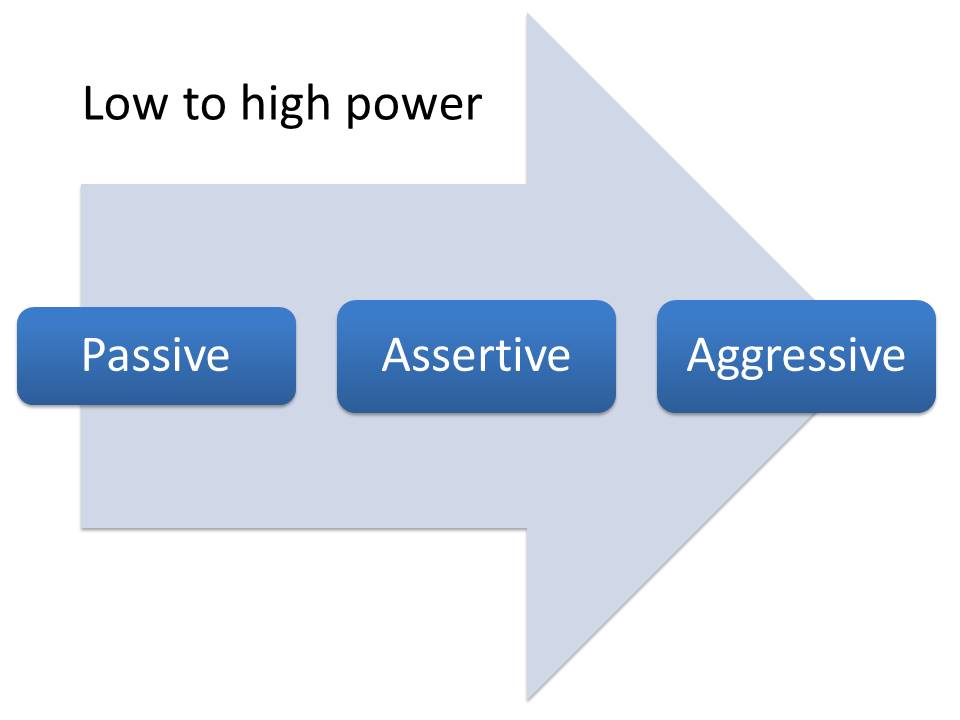
    aggression levels

    2. Exposing motives

    This goes one step beyond assertive confrontation. You basically tell them why they’re doing what they’re doing. The beauty of this strategy is that you get to be as confrontational as possible without being aggressive.

    For example, replying to the passive-aggressive “I’m fine” with something like:

    “You know what: You don’t have to do that. You can tell me you’re not fine when you’re not.”

    This not only exposes their operations but also their motives. When motives are exposed, you can’t make the person feel more naked.

    If you’re an employer, you can confront the employee who leaves work half-done by saying something like:

    “If you didn’t want to do it, you could’ve told me. I’d have done it myself.”

    When you confront them at the level of motives, you signal to them that their passive-aggressive ‘game’ will not work on you.

    3. Tit-for-tat

    Passive-aggressive behavior often succeeds in annoying us. The problem is: We can’t overtly express our annoyance in most cases. Instead, we can play the same game back at them: We can respond to passive aggression with passive aggression.

    The upside of this strategy, when executed well, is that it’s a variation of the ‘exposing their motives’ technique. By playing the same game back at them, you show them how ridiculous they’re being.

    It also forces them to put themselves in your shoes and make them realize how annoying their passive aggression must be to you.

    The key to executing this strategy well is being passive-aggressive to them in the same manner in which they’ve been passive-aggressive to you.

    For example, if they throw backhanded compliments at you, you do it too. If they say, “I’m fine” you say that too when you’re mad, making sure your tone and body language communicate otherwise, of course.

    The only downside of this technique is that you’ll give them a tinge of satisfaction that their passive aggression worked. If it hadn’t, you wouldn’t be compelled to hit back passive-aggressively.

    Still, the benefits of annoying them back this way might outweigh any satisfaction that they can get out of it. It kind of forces them into a corner. If they hit back again, you can be satisfied that your counter-strategy worked.

    I recommend stopping at this point because you don’t want to go down the endless spiral of passive-aggressive tit-for-tats. If you come to this point, you’ve probably taught them the lesson by now.

    4. Non-reaction

    Not reacting to passive-aggressive behavior in any shape or form is the surest way to annoy a passive-aggressive person. While it may be effective in pissing them off, it’s not so good for your own mental health.

    The thing is, passive aggression does get under our skin, especially when it comes from people we care about. If we don’t react to it at all, we do teach them that their passive aggression isn’t working.

    But the problem with this passive strategy is that the hurt will keep building up. You may put on a calm and non-reactive face for a time. But if they continue to be passively aggressive, you’re likely to cave in and crack under the pressure, resorting to aggression.

    This strategy requires a lot of inner work to successfully pull off. You need to have attained a certain level of mastery over your emotions.

  • How to respond to indifference

    How to respond to indifference

    Indifference simply means not caring. When someone is indifferent toward you, they’re showing they don’t care about you. Caring for others is an investment in others. Therefore, indifference can be seen as a way to withdraw or decrease investment from someone.

    In this article, we’ll discuss signs of indifference, what causes indifference, and how to respond to indifference appropriately.

    When we enter relationships, we expect to give and take. Indifference is a form of not giving. It’s the opposite of validation- a basic need of humans.

    Hence, when someone is being indifferent towards you, you detect this investment imbalance, and it bothers you. Of course, indifference from people you’re indifferent to doesn’t matter because you’re not invested in them.

    Indifference from someone only bothers you when you’re invested in them and care about them. You’re investing in them, and you expect them to give back. But they’re not giving back. They’re being indifferent towards you.

    Signs of indifference

    There are many ways to show indifference, but the most common way is to avoid or show a lack of interest in, communicating with you. Unwillingness to engage is the surest sign of indifference. All other investments come after engagement.

    Indifference can manifest in the following ways:

    1. Not initiating communication

    If you’re the person who always starts conversations with them in your relationship, we got a problem. Chances are they’re indifferent toward you. In a healthy, balanced relationship, both parties frequently initiate contact.

    2. Not asking you questions about you

    Many relationships and friendships are purely transactional. They want something from you and you want something from them. But humans crave lasting relationships that go beyond mere transactions.

    A sure sign of a lasting relationship is that they’re not just interested in what you have to offer but also in you as a person. When they’re interested in you as a person, the transaction becomes lasting and psychological. They want to be with you because it contributes to their well-being.

    Hence, a lack of interest in who you are as a person can be a sign of indifference. Once they get what they want from you, the relationship is doomed.

    Not asking questions about you, your background, your interests, or your values shows they’re indifferent toward you.

    3. Cutting short conversations

    Again, this is a way to disengage and show indifference. Communication equals investment, and avoiding or cutting short communication shows an unwillingness to invest.

    This can manifest in face-face conversations where they don’t pay attention to what you have to say. Body language gestures showing a lack of interest or boredom reveal all.

    While texting, too, you can tell when someone is interested in having a conversation with you and when they’re not.

    When they answer with a short “Yes” or a “No” or don’t put any effort into extending a conversation, it’s likely a sign of indifference. They just want to escape the conversation.

    The extreme manifestation of this would be not returning your calls or not replying to your texts at all. If that happens to you, you need to re-evaluate where you stand in the relationship.

    What causes indifference?

    What could make someone not invest in a relationship? Half the job of responding appropriately to indifference is figuring out what’s causing it.

    Following are the possible reasons behind a person’s indifference:

    1. They’re not interested in you

    Well, duh. Obvious as it sounds, it’s crazy how some people just don’t get it. They keep pursuing those who’re indifferent toward them. Those who’re indifferent towards you may not directly tell you they don’t like you out of politeness. They’re being indifferent, hoping you’ll get the message.

    Again, relationships have to be about give and take. If you give but don’t get, move on.

    2. They really don’t care about your stuff

    Just because people are in a relationship doesn’t mean they have to like every little thing about the other person.

    Yet we humans have a tendency to validate our life’s decisions, hobbies, and interests. We want others, especially those close to us, to like what we like. If it happens, great! But don’t expect it to happen for every little thing.

    Just because they’re indifferent towards a quirky hobby of yours doesn’t mean they’re not interested in you. There may still be dozens of aspects of your personality they still like.

    You may show them a movie by your favorite director, and they’re “meh” about it. They just don’t care about this stuff. It’s their opinion, and you ought to respect it. They’re indifferent to it, not necessarily to you.

    At the same time, a relationship built on few mutual interests is a relationship built on shaky grounds. If they don’t care about any of your stuff, we got a problem. Here, it’s likely they’re indifferent toward you because they’re indifferent towards everything that makes up, well, you.

    3. You pissed them off, and now they’re punishing you

    This happens all the time in relationships. If you did something they don’t approve of, they want to communicate their displeasure. A common way this is done is through indifference. The goal is to motivate you to make amends and avoid the behavior in the future.

    This temporary withdrawal of investment is based on what you did. Avoid jumping to the conclusion that they’re not invested in you.

    4. They’re masking interest

    Sometimes, we display behaviors opposite to how we really feel. Freud called this reaction formation, and it’s a defense mechanism.

    So, a person might be interested in you. This makes them feel powerless. They don’t like the effect you have on them. It makes them anxious.

    So they communicate the opposite to manage their anxiety and improve their image. They show they’re indifferent towards you.

    This is forced indifference. The way they truly feel isn’t communicated in their behavior. However, how they truly feel might sometimes leak out in their behavior.

    As a result, they may alternate between caring and not caring, sending you mixed signals.

    5. They’re testing you

    If one party in a relationship feels they’re giving more than they’re getting, they might carry out an investment test. They withdraw or decrease their investment to see how you’ll react. They expect you to increase investment or keep investing how you’ve been investing.

    If you do these things, you pass the test. If you also withdraw investment, responding to indifference with indifference, you make them feel you’re not invested in the relationship as much as they are.

    At this point, they might either end the relationship or re-start investment if they’re really into you, hoping you’ll invest in the future.

    6. They found someone else

    Not all have the courage to be straightforward and honest in their relationships. If they found someone else, they might start being indifferent toward you, hoping you’ll end the relationship. That’s relationship death by a thousand cuts of tiny indifferences.

    If you’re the one who found someone else and catch yourself being indifferent, just tell them. End the relationship right away. It’s not cool to leave people hanging on false hope.

    How to respond to indifference appropriately

    As you’ve seen, there can be many reasons people are being indifferent toward you. The human tendency is to always jump to the conclusion that they don’t care about you. But you got to collect more data and do more analysis before you can reach that conclusion.

    Your response to indifference will depend on the person, the situation, and the stage of the relationship you two are in.

    In general, be more sensitive to indifference in the initial stages of a relationship. In established relationships, it’s okay for partners to occasionally show indifference.

    Here are some specific things you need to note, though:

    Is it one-off or continual indifference?

    A one-off indifference event is unlikely to be about you but about what you did or even about them. It’s likely to be a temporary withdrawal of investment.

    If the indifference is continual, it’s likely they don’t care about you.

    Let’s face it: Humans have a strong tendency to be selfish. Maybe they’re taking your investments in the relationship for granted. They’re getting out of it as much as they can and giving nothing back.

    Humans naturally keep track of ‘give and take’ in relationships. However, when you’re much more invested in them than they are, because, let’s say, they’re super attractive and you’re average-looking, it’s easy to lose track of give and take.

    Your mind’s like:

    “We have so much to gain from them (reproductively). It’s okay if they don’t invest. Let’s forget about investment tracking for a while and keep thinking about how awesome it’d be if they were ours.”

    Thing is, if they’re not into you at all, you’re playing a losing game. Your own mind deceives you into believing that you can get something that’s out of your league because the mind is designed to be selfish and maximize reproductive gains.

    This explains why people become obsessed with celebrities and those who’re way out of their league.

    If you keep giving, hoping to get in the future, maybe it’s time to test the validity of those hopes.

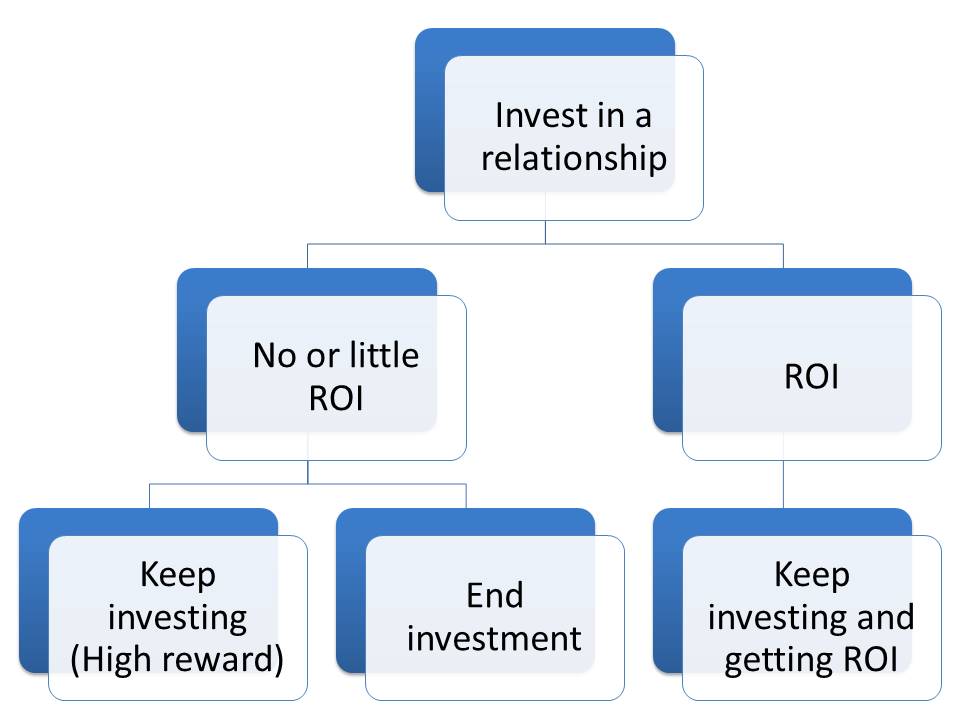
    investing in a relationship decision tree
    ROI = Return On Investment; Note that when the potential reward is high, we can get stuck in keeping on investing with no or little ROI.

    What are they gaining by being indifferent?

    Asking this question to yourself can be helpful. As pointed out earlier, showing indifference can be a strategy to mask interest or to test you.

    When you can point to the exact reason they’re being indifferent, you can then respond accordingly.

    Ask yourself questions like:

    • What’s your current response to their indifference?
    • Could it be that your current response is feeding their indifference?
    • What if you changed your response? What do you expect to happen?

    The best strategy in any situation: Confront them

    If you’re on the receiving end of indifference and can’t figure out the exact reason, confront them. It’s the best way to clarify things and figure out what’s going on.

    You can’t make decisions based on assumptions. More often than not, that leads you down the wrong path.

    Often, we see reality through our own narrow lens of perception. By confronting them and telling them how you feel, they’ll be encouraged to share their version of the story. This will broaden your perception, and you’ll make a better decision.

    Everyday indifference: Putting it all together

    Indifference doesn’t always have to be overt. Sometimes, it’s shown subtly. For instance, you ask your partner what dress you want to wear, and they’re like:

    “I don’t care.”

    Another example would be asking them where you should eat, and they say:

    “I don’t know.”

    When you’re at the receiving end of these responses, you always feel invalidated irrespective of whether they invalidated you intentionally or unintentionally. You see these responses as them cutting short the conversation, not willing to engage.

    Maybe they really don’t care about your dresses or choosing what place to eat. Or it may be that they’re deliberately being indifferent. Or both.

    Again, this goes back to being indifferent to you versus being indifferent to your stuff. You can’t really figure out what it is without confronting them or collecting more information.

    Consider how showing even a bit of investment makes all the difference.

    Say, instead of blurting out, “I don’t care”, they first looked at some dresses and then said:

    “I don’t care. Wear what you want.”

    This wouldn’t make you feel invalidated because there was some, albeit tiny, investment on their part. They cared enough to look at the dresses. In your mind, that automatically gets translated to “They care about me”.

    In sum, before you assume that someone is being indifferent toward you, you need to collect more information. It’s because decisions based on such assumptions can have a serious impact on your relationships.

  • How to deal with rigid people (7 Effective tips)

    How to deal with rigid people (7 Effective tips)

    Rigid people are people with inflexible thoughts and behavior patterns. Being rigid in one’s thinking is the very opposite of being open-minded.

    Rigid people are resistant to new ideas, ways of being, and ways of behaving. As a result, they learn little and they grow little. They have a fixed mindset versus a growth mindset.

    People may be rigid because it’s part of their personality or they may be rigid in some life areas while being more flexible in other areas. In this article, we discuss what causes rigidity in people and how to deal with rigid people.

    What causes rigidity?

    People can have rigid thoughts and display rigid behaviors for several reasons. Generally, people are rigid because being rigid serves them in some way. Common reasons behind being inflexible are:

    1. Lack of conviction

    People hold on to what they know or their ways of behaving when they’re unconvinced that change can help them. This sounds obvious, but it’s a useful reminder that we might be too quick to label someone as rigid.

    We should first look at ourselves and make sure we are doing a good job of trying to convince them to change their ways.

    It’s easy to label others as rigid when in reality we’re the ones who lack convincing skills. If you’re going to sell a new idea to someone, you have to do your own homework first. You have to level up your convincing skills.

    2. Protecting beliefs and habits

    Humans are creatures of habit. Once they form a belief or develop a habit, they just roll with it. They get comfortable with their thoughts and habits. They feel secure in these familiar patterns.

    A novel idea feels unsafe, unfamiliar, and uncomfortable. Through confirmation bias, people maintain their existing ideas and reject new, especially opposing ideas. Through cognitive dissonance, they try to resolve the discomfort caused by new ideas.

    3. Need for closure

    This is closely related to the previous reason. People have a strong need for closure, meaning, they want matters to be settled as soon as possible. They hate ambiguity. They want to stick to their ‘settled’ ideas about something.

    They don’t want to re-open questioning and debate. Having to reconsider things takes considerable mental energy and many people are too cognitively lazy to expend that energy.

    The need for closure often leads to ineffective problem-solving and jumping to conclusions. Closed-minded people have an especially powerful need for closure. They don’t want to re-open old files in the cabinet of their mind, even if they have a good reason to do so.

    4. Need for control

    When we believe we’ve figured out aspects of the world (attained closure), we feel in control. Admitting our knowledge might be lacking throws things back into chaos. Those who constantly evolve consistently go through periods of order and chaos.

    Rigid people want to cling to their order and fear chaos, even if that chaos has the potential to bring a better future order.

    Control freaks and those with OCD symptoms are especially likely to fear losing control and are obsessively attached to their thoughts and behavior patterns.

    5. Avoiding pain

    An important reason people are rigidly attached to their beliefs and ideas is that they identify with them. As a result, losing their beliefs means losing their identity. An identity crisis is not a pleasant experience to go through.

    When people identify with their beliefs, they derive pride from them. Losing these beliefs not only means losing their identity but also losing important sources of pride and ego gratification.

    All this, combined with the fear of being wrong or looking stupid, makes people rigidly attached to their ideas. Admitting you’re wrong is painful, especially for those who identify with their ideas. They have an emotional investment in their ideas.

    How to deal with rigid people

    Changing a rigid person’s mind is not an easy task. It can sometimes take a lot of time and energy. So before you decide to deal with a rigid person, make sure doing so is going to be worth your while. Otherwise, just let it slide. In most cases, it’s just not worth it.

    Still, following are the strategies you can use to make people less rigid:

    1. Express your ideas clearly and convincingly
    2. Involve them in your idea
    3. Frame your idea as a possibility
    4. Use authority and social proof
    5. Communicate your idea assertively
    6. Show them the mirror
    7. Aggression

    1. Express your ideas clearly and convincingly

    Vague and poorly expressed ideas cannot change people’s minds. A well-expressed idea registers well in the other person’s mind. When that happens, they may not resist it as much because it makes sense to them.

    You can also state your ideas repeatedly so they become familiar to your target person. Once familiarity sets in, so does comfort. Now, the new idea isn’t this unknown devil they need to immediately destroy. They can give it a shot.

    2. Involve them in your idea

    Another trick is to involve them in your idea. The major reason they’re fighting the idea maybe because it’s your idea. Instead of presenting the idea as your idea, lead them to it. Make them think they played a part in coming up with the idea.

    For example, instead of saying something like, “I suggest we hire a sales team” to your rigid boss, you can say:

    “Our sales numbers have the potential to get better.”

    The boss will probably ask you how. Then you can suggest hiring a sales team.

    Your idea might have been brilliant. But framing it as your idea might have led to resistance. By involving your boss in the idea, you decrease the chances of resistance. They feel they helped you come up with the idea and it’s hard to resist one’s own ideas.

    3. Frame your idea as a possibility 

    Rigid people are sure of their own ideas. When you’re sure of your ideas too, you too become rigid. When rigid ideas collide, they create a lot of friction.

    You have to be sure of your idea, of course, but sometimes you need to communicate it gently to reduce friction.

    One way to do this is to talk about your idea as a possibility. Again, you remove yourself from your idea such that it’s no longer your idea but a rational possibility.

    For example, when a rigid person says something you don’t agree with, you can say:

    “I think it’s also possible that [state your idea].”

    “Don’t you think it’s possible that [state your idea]?’

    When people are fighting your ideas, often they’re fighting you. When you remove yourself from your idea, you decrease resistance because it’s lame to fight a mere idea, a possibility.

    4. Use authority and social proof

    Authority and social proof are powerful convincing tools. Marketers use them all the time. Find people your target person respects, and try to convince them instead. We tend to agree with those we admire and respect.

    Get as much buy-in for your idea from others as you can. For instance, if the entire office agrees with your idea except your boss, that’d make your boss look unreasonable for being so rigid.

    5. Communicate your idea assertively

    Assertiveness is an important communication skill. When you find that someone is being too rigid and stubborn with their ways, you can do one of the following depending on the situation: (see Assertiveness vs Aggression for more details)

    • Be passive (Do nothing)

    While it may be the best strategy at times, often when you do nothing, nothing changes.

    • Be aggressive

    If you criticize their idea or push your idea aggressively, you’re bound to face resistance. This strategy rarely works and often leads to a power struggle that sours the relationship.

    • Be assertive

    It’s the sweet spot between passivity and aggression. You communicate your idea or disagreement without a tinge of aggression. When there’s no aggression, the other person has no reason to defend. When they’ve no reason to defend, they’re less likely to resist your idea.

    Ideas communicated assertively settle in their minds as they face no resistance. When you keep communicating your ideas assertively, they’ll gather a momentum of their own in your target person’s mind. Having no reason to defend, they’ll find themselves forced to consider your ideas.

    6. Show them the mirror

    This one is more likely to work with intelligent and self-reflective people. You basically point out the flaws in their logic and expose their biases. You appeal to their rationality.

    This way, you’re not attacking their idea- their oh-so-precious idea. Instead, you’re criticizing the way they’ve reasoned to come up with that idea.

    When you criticize someone’s idea directly, you’re communicating:

    “Your idea is crap. Therefore, you’re crap.”

    When you criticize their reasoning, you’re communicating:

    “The way you’ve reasoned is crap. You can do better. You can be more rational.”

    The key is not to make them look stupid for being irrational. Don’t use any insults or labels.

    To force them into self-reflection, you can also ask them something like:

    “Why are you being so rigid?”

    7. Aggression

    Extreme circumstances sometimes demand extreme measures. Aggression, for example, can sometimes be effective in breaking the rigidity of people.

    Be warned: It’s a risky strategy that may only work on open-minded people who’re being uncharacteristically rigid. They can handle criticism well.

    Basically, you insult or mock their ideas. You can even show anger and yell at them if you want to. You can also use satire and biting sarcasm.

    This extreme aggression strategy aims to shock and completely disarm the other person. Moderate aggression is faced with moderate aggression but few can handle extreme aggression.

    They’re forced to see the error in their ways. They cannot defend themselves because the attack is so strong.

  • Assertiveness training: Practical assertiveness guide

    Assertiveness training: Practical assertiveness guide

    I’ve covered assertiveness in two previous articles, but I felt like I haven’t given enough attention to assertiveness training. Many people know what assertiveness is, but when it comes to situations that call for assertive behavior, they get stuck and aren’t sure what may or may not work.

    If you’ve been a reader here, you know I like boiling things down to their essence. I strongly believe the little you have to remember, the better. That’s why this article will not be an information overload that only ends up overwhelming you.

    First, I’ll briefly explain what assertiveness means, and then I’ll dive into the underlying dynamics of assertive interactions. Understanding these dynamics will put you in a better position to be more assertive, and you’ll be able to naturally adjust your assertiveness to the demands of the situation.

    Assertiveness is a communication style

    Assertiveness is a communication style that lies midway between two other extreme communication styles- passiveness and aggressiveness. When you feel your rights have been taken away or that you’ve been dealt with unfairly, you can behave in one of the three ways:

    • Aggressively = Fix your situation by overpowering others.
    • Assertively = Fix your situation without overpowering others.
    • Passively = Do nothing to fix your situation.

    For example, if you feel like your boss isn’t paying you as much as you’re worth, you might yell at them and demand a raise (aggressive), or you can explain why you deserve a raise (assertive) or you can avoid asking for a raise (passive/submissive).

    Hence, being assertive is all about asking for your rights and what you want appropriately, without stomping on the rights of others.1 It’s the sweet spot between being aggressive and being passive.

    Of course, in some situations, being aggressive or even being passive might pay off (see my internship example). But in most conflicts, being assertive is the optimal strategy.

    Grasping the dynamics of assertiveness

    To get good at being assertive, you have to understand what dynamics operate underneath our social interactions. When we interact with people, we’re also assessing them as allies or enemies.2

    In an ideal world, people would deal with conflicts 100% objectively, removing themselves and others from conflict, focusing on the problem at hand, and arriving at a win-win solution. But that rarely happens in the real world. People’s egos, character, reputation, dignity all get mixed up in their conflicts.

    Therefore, when trying to behave assertively, you have to keep this basic thing in mind that individuals rarely approach conflict situations with 100% objectivity.

    The principal message of my previous article on assertiveness vs aggressiveness was that you should remove yourself and the other party from the problem at hand. I elaborated little on exactly how one can go about doing that.

    In this article, however, I want to paint a clearer picture of what goes on during conflict situations and how to choose more assertive ways of communicating.

    When you’re trying to be assertive, really the only enemy you have to fight is the other person’s perception that you’re stepping on their rights (i.e. you’re being their enemy). In other words, your goal is to change the other person’s likely perception that you’re somehow taking away their power.

    It all boils down to power. When you’re being passive or submissive, you give up your power. When you’re being aggressive, you gain power by taking away the other person’s power.

    Your task in being assertive is to behave in such a way that you don’t take their power and, at the same time, you don’t give away much of your own power.

    assertiveness power spectrum

    Why being assertive is tricky

    Being assertive is tricky, and there’s a fine line between assertiveness and aggressiveness. This is because assertiveness automatically increases your power.

    When you’re being assertive, you gain power, but not enough that you become aggressive. You feel you’ve been wronged i.e. someone took your power and put you in an inferior power position. In being assertive, you try to regain just that amount of power back that you feel you’ve lost.

    In gaining this slight power, you do take power away from the other person, but not so much that they’re brought down to submission.

    Hence, being assertive is this delicate power re-adjustment task that requires advanced social skills. It’s very much like walking on a tightrope. If your power re-adjustment attempt ends up creating a power imbalance, you trip and fall down. One party feels violated, and the conflict escalates.

    Assertiveness training: Practicing assertive behaviors

    So how do you go about doing this power re-adjustment?

    The risk in being assertive almost entirely lies in going too far and taking away too much of the other person’s power. All assertive behaviors are designed to put brakes on your power-seeking so you can regain just the right amount of power and not skid over to aggressiveness.

    Let’s now look at some real-life examples that call for assertive behavior:

    Example # 1 (Disagreements)

    Having disagreements is one of the most common situations that call for assertive behavior. When someone disagrees with you, they take some of your power. I know it sounds irrational, but it’s just the way the mind works. It’s why criticism feels bad and why one needs to do enough mental work before they can develop the ability to handle disagreements.

    Disagreements turn into arguments for precisely the same reason. It’s a power contest where each party tries to one-up the other by disagreeing with them, often harshly. Even if you can disagree politely, there’s still a chance that the other person will feel a tinge of loss of power and esteem, no matter how enlightened they claim to be.

    Your task in being assertive while disagreeing with someone is to make up for that slight power loss that they might feel.

    Say you’re working on a project and your colleague comes up with a bad idea. They seem excited about the idea, but you’re sure it won’t work. How do you express your disagreement?

    1. Laugh at their idea. (Takes their power)
    2. Say you disagree with their idea. (Takes their power slightly)
    3. Say you disagree with their idea + explain why you disagree. (Doesn’t take their power)    

    The first option is aggressive and you’ll likely spoil your relationship with them. The second option seems assertive. After all, you’re directly expressing how you feel, right? But it runs the risk of attacking them, i.e. taking away their power.

    Since you gave them no reason for your disagreement, they’ll probably think you have personal enmity against them (see fundamental attribution error).

    The third option is ideal because it takes care of the above risk. It removes their ego from the situation. They’re unlikely to think your disagreement had any ulterior motive (such as putting them down).

    Example # 2 (Ending conversations)

    Okay, this is a fairly common one. You’re talking to your relationship partner on the phone. It started as a conversation, but now they’re going on and on about something you don’t care about. You want to end the conversation, but you have no idea how.

    Here are the three possible things you might say in such a situation:

    1. “I have to go, bye.” (Takes their power)
    2. “I have to go, talk to you later.” (Takes their power slightly)
    3. “Can we talk later? I have some unfinished work left to do.” (Gives them slight power) 

    The first option is undesirable. You’re breaking off the conversation and taking their power to choose when to end the conversation. You’re imposing your decision on them. Your intention may not be to be aggressive, but it feels aggressive to the person on the receiving end.

    The second option is better. You’re imposing your decision on them but promising to make up for it later. Still, you’re the one who ended the conversation. It may not feel as bad as the previous option, but you took some of their power. It’s still risky.

    The last option is perfect and smooth. You want to end the conversation, but you let it be their decision. Not only are you not taking away their power, but you actually give them some power to make your decision for you.

    Of course, they can still say, “No, I want to continue talking” but because you were considerate enough not to overpower them, they’re much more likely to comply.

    Example # 3 (Demanding family member)

    This one’s similar to the previous example. You’re working from home and a family member suddenly asks you to do something for them. What do you tell them in this situation?

    1. “Can’t you see I’m busy?” (Takes their power)
    2. “I can’t help you. I’ve got my own stuff to deal with.” (Takes their power)
    3. “Shall I finish this task I’m working on first?” (Gives them power) 

    Option 1 is aggressive because you’re not only refusing but also accusing them of being stupid for not noticing that you’re busy. When you judge people negatively, you exert power over them.

    Option 2 is outright refusal which in itself disempowering. The next sentence is slightly rude and hence, even more disempowering.

    Option 3 is assertive and empowering because, as in the previous example, you give them power to make your decision for you.

    There’s still a chance the other person might think you’re putting your own needs before theirs, even if you give them the power to decide.

    To allay their fears, you can minimize your own work so it doesn’t appear to overwhelm their request. I like to call it task minimization. For instance, you can say something like:

    “Shall I finish this small task I’m working on first?”

    Or

    “Can I finish this little thing first?”

    Using words like “small” and “little” reassures them you aren’t throwing their request straight out of the window. Instead, you’re acknowledging it and even emphasizing it over your own “small” work.

    Make sure you do take on their work later or they’ll think you’re manipulative.

    This task minimization technique can also be very effective when you have to make assertive requests.

    For example, I used to share a room during my college days with a guy who had this annoying habit of listening to music without earphones. It was very distracting to me.

    I had a hard time believing someone could be this inconsiderate, and it took me a while to come up with a perfect assertive sentence. I really wanted to say something like, “You inconsiderate moron, don’t you have earphones?” but I knew that’d be aggressive. Instead, I told him, “Could you turn down the volume a bit?”

    Of course, I didn’t want him to turn the volume down only by “a bit”. I wanted him to turn it down fully, but minimizing my request made him more likely to comply. He turned the volume down significantly and a few minutes later, fully.  

    Sure, only saying, “Could you turn down the volume?” would’ve given him the power of choice, but he might still have considered it too big a favour. Task minimization took care of that.

    People do this all the time when they say, “I have a small favour to ask”. Whether the subsequent favour is actually small is a different story.

    Example # 4 (Boss who overburdens)

    Say you’re overburdened with work by your boss. While you’re working, he comes to your desk and assigns you another task. At this point, you’re angry and want him to know that you can’t take any more work.

    1. “I’m already stressed out by all this work you’ve given me. I can’t take up more work.” (Takes their power)
    2. “This is taking too much time. Let me finish this first.” (Takes their power)
    3. “This work will take a lot of time because…” (Doesn’t take their power)   

    The first option is not only accusatory, but it also signals you’re incapable of handling stress. In the most conventional sense, you’re being assertive in expressing how you feel, but in terms of power dynamics, you’re creating a power imbalance. By blaming your boss and refusing to take up more work, you’re taking away their power.

    The second option could be used as an indirect way to let your boss conclude that they gave you too much work. But it shows your incompetence. Why is it taking too much time? Are you incompetent? Saying “Let me finish this first” is not asking. It’s imposing your decision on them, which is disempowering.

    The third option works because it effectively removes you and your boss from the problem. You’re not showing that you’re incompetent (giving up your power) and you’re not accusing your boss (taking away their power). Instead, by providing reasons you make the problem 100% objective.

    How to say “No”

    I mentioned earlier that refusing to comply with someone is taking away their power. People don’t like to hear a “No”. Instead, giving reasons for your “No” is a better strategy. It removes you and the other party from the refusal.

    Since a “No” takes away their power, you can give them power in some other area. You can make it up to them somehow to restore the power balance.

    For example,

    “Are you down for coffee later?”

    “I enjoy having coffee with you, but I have other plans this evening.”

    Since refusal is inherently disempowering, you empower them in another way (compliment) to restore the power balance. As a bonus, you also give them a reason for your refusal, removing yourself and them from the equation.

    Appeal to their sense of fairness

    If you’ve been wronged, your task in being assertive is to show the other person how you’ve been wronged, not how they wronged you. The former appeals to their sense of fairness and the latter to their sense of competitiveness.

    And you can’t expect justice and fairness from someone you’re competing with.

    The idea is to show them how their behavior affected you without accusing them directly. This gives them space to realize and, hopefully, correct their mistake. When you attack someone, you attack their intentions without enough evidence.

    Maybe they had neutral or even good intentions when they did what they did. So it’s an excellent strategy to focus on their behavior and its effect on you than on their character. You let them know that their behavior affected you negatively.

    Now, it’s up to them, if they believe in fairness, to fix your situation. However, don’t beg for justice as that way you’ll lose your power, deepening the power gap, and giving them room to exploit you more if they’re evil.

    You simply have to give information. Show them how you’re being affected and how it’s not fair without giving away too much of your power. If they still don’t get it, you’re probably better off ending the relationship.

    What it all comes down do

    What you’ve learned so far are the underlying power dynamics of social interactions that can enable you to choose more assertive responses. However, long-lasting assertiveness can only be developed via long-term personality changes.

    Not all people know or understand social dynamics, yet they’re very assertive. It’s because they value themselves enough to value their own opinions, feelings, and needs. The degree of assertiveness shown by a person is proportional to their self-worth.

    This is why people naturally become more assertive as they grow older. Older people have more skills, achievements, and self-confidence to base their assertiveness on. Therefore, working on yourself is the best thing you can do to increase your assertiveness naturally.

    Unassertiveness is mostly bad

    Protecting the ego is an important task for the mind. If you don’t behave assertively when you should have, your mind will be mad at you. You’ll feel bad and think about how you should have behaved instead, sometimes even years later.

    Unassertiveness is associated with anxiety, especially social anxiety.3 Often, people are unassertive because they fear they’ll be judged negatively by others.4 The social dynamics you learned in this article should easily help you bypass this fear.

    Unassertiveness can lead to relationship dissatisfaction because you feel you’re giving more than you’re receiving. You don’t express your needs to your partner and feel subdued by them.

    Continuous unassertive behavior may even lead to depression.5

    The long-term solution to unassertiveness is to practice assertive behaviors while simultaneously working to increase your self-worth.

    References

    1. Alberti, R. E., & Emmons, M. (1995). Your perfect right. Impact Publishers.
    2. Cuddy, A. J., Fiske, S. T., & Glick, P. (2008). Warmth and competence as universal dimensions of social perception: The stereotype content model and the BIAS map. Advances in experimental social psychology, 40, 61-149.
    3. Morgan, W. G. (1974). The relationship between expressed social fears and assertiveness and its treatment implications. Behaviour Research and Therapy, 12(3), 255-257.
    4. Speed, B. C., Goldstein, B. L., & Goldfried, M. R. (2018). Assertiveness training: A forgotten evidence‐based treatment. Clinical Psychology: Science and Practice, 25(1), e12216.
    5. Ball, S. G., Otto, M. W., Pollack, M. H., & Rosenbaum, J. F. (1994). Predicting prospective episodes of depression in patients with panic disorder: A longitudinal study. Journal of Consulting and Clinical Psychology, 62(2), 359.
  • Assertiveness vs aggressiveness

    Assertiveness vs aggressiveness

    When people are wronged, they commonly react in two ways. Either they react non-assertively and submissively, or they react aggressively and dominantly.

    Being non-assertive means you’re passive about your situation and don’t seek to remedy it in any way. Your desire to not offend others comes in the way of standing up for yourself.

    Aggressiveness, on the other hand, means you devalue, put down, or even harm the other person in an attempt to stand up for your rights.

    There’s a third, in-between strategy to deal with these types of situations. It’s called assertiveness, and it means standing up for your rights without hurting or offending the other person.

    Assertiveness differs from aggressiveness in the following ways:

    • Aggressiveness stems from the intention to hurt others and to violate their rights. In assertiveness, there’s no intention to hurt others or take their rights away.
    • Assertiveness may involve thinking win-win but never win-lose. Aggressiveness always involves the attitude of win-lose.
    • Assertive behavior is more effective because it produces more positive outcomes. Aggressive behavior, on the contrary, creates a cycle of aggression and counter-aggression.
    • Assertive behavior maintains the respect and dignity of the other individual while aggressive behavior does not.
    • Aggressive behavior often involves physical or verbal threats whereas assertive behavior does not.

    As you can see, assertiveness is a vital interpersonal skill to develop if you want to achieve your goals involving others whilst maintaining good relations with them. Clearly, assertiveness is a much better strategy to handle interpersonal conflicts than aggressiveness and non-assertiveness.

    What does assertive behavior entail?

    Researchers have found that assertiveness behavior comprises a set of responses.1 Specifically, assertiveness comprises the following abilities:

    • The ability to say ‘No’.
    • The ability to make requests.
    • The ability to express positive and negative feelings.
    • The ability to start, continue and end conversations.

    The right strategy depends on the situation

    As mentioned above, there are three strategies to handle interpersonal conflicts- aggressiveness, assertiveness, and non-assertiveness. You can handle most of your conflicts well by being assertive.

    However, in some situations, non-assertiveness or even aggressiveness may be viable strategies.

    For example, if your boss unnecessarily criticizes your work, you may adopt the strategy of non-assertiveness if you heavily depend on your job. If you know you’re going to have a hard time finding another job.

    If you’re being physically or verbally attacked, you may adopt aggressiveness to counter the situation.

    Therefore, the strategy you adopt will depend on the situation. You have to estimate the risks and benefits of a strategy in a particular situation.

    If you find yourself in conflict with a person but you don’t want to spoil your relations with them, assertiveness is the way to go. Assertiveness will bring you out of many difficult situations without risking your relationships.

    Why aren’t people assertive then?

    Humans are social animals. We’re designed to scan our social environment to detect potential enemies and friends. In a conflict situation, this psychological mechanism takes precedence over objectively resolving an issue.

    In other words, we jump to blame others when we’re wronged before we even get a chance to analyse the situation properly. This is why you’re more likely to think that a friend is ignoring you when you don’t receive a text from them than think they must be probably busy.

    In psychology, this tendency is aptly called the fundamental attribution error. It’s fundamental to human nature.

    When a conflict happens, many people don’t analyse the issue objectively. They don’t try to come up with a rational solution that may be acceptable to all parties. Instead, they engage in blame game.

    They think other people are out to get them and, therefore, behave aggressively and defensively. This is why, if you happen to objectively criticize your boss’s work, with no intention to put them down, they may still take it personally.

    The art of assertiveness

    Given how people make conflicts about them and others instead of objectively analysing the situation, the art of assertiveness is all about removing people and their egos from conflicts.

    When you’re trying to be assertive, convince the other person you don’t intend to blame them or put them down. In other words, you have to remove yourself and them from the problem at hand.

    Convince them that your demands are reasonable and devoid of any personal grudges or hostilities. Convince them you’re not trying to compete with them, just asking for your rights.

    Of course, given human proclivity to turn every conflict into a social competition, this isn’t easy to do. Hence, you don’t see many assertive people walking around. People either accept defeat passively or try to win aggressively. It’s a social competition for them in which you can only win or lose.

    How to remove people from conflicts

    Assertiveness often boils down to the way you speak when asking for your rights. If you calmly and politely explain your situation, the other person has no reason to think you’re being aggressive. It’s no longer about them or you and who wins or loses; it’s about the problem at hand.

    If they comply, it’s not because you ‘won’ and they ‘lost’. They have to comply willingly. If they don’t, they’re bound to think you scored a point over them. That is, you made them do something they didn’t want to do.

    You have to make them want to do it. Appeal to their reason. Nobody likes to be seen as unreasonable. If you convince them your demands are reasonable, you increase the odds of achieving your purpose.

    Remember, assertiveness isn’t just about removing the other person’s ego from the problem, but also your own. When we feel we’ve been wronged, it’s tempting to lash out and hurt the other person. We’re just as quick to make a problem about us (we’ve been intentionally hurt) as we are to make it about them (they intentionally hurt us).

    Sure, people do intentionally hurt each other, but you can’t really blame a person without enough evidence. You have to leave intentions aside and work to resolve the issue. Over time, intentions will inevitably reveal themselves.

    If a person doesn’t comply despite your best efforts to explain your situation and show no intention of helping you, it points to some personal hostility they may have against you.

    You may then take an extreme measure such as cutting them out from your life. But initially, you need to give yourself and the other person a chance to work things out, without worrying about intentions too much.

    An assertive person is not interested in quarrelling but in finding a solution that can be acceptable to all parties.

    Assertive behavior requires you to remove the temptation of ascribing intentions to people, you don’t make the problem about yourself or them, and you think about the consequences of your actions. Thankfully, assertiveness skills can be learned with practice.2

    When assertiveness gets mistaken for aggressiveness

    Non-assertiveness stems from the desire to maintain social relations and to not offend others. Aggressiveness offends others and hurts social relations.

    Aggressiveness is an extreme form of assertiveness involving devaluing the other person. Since assertiveness is very close in meaning to aggressiveness and people have a tendency to blame others, assertiveness can be easily confused for aggressiveness.

    You may, in your own mind, be able to successfully draw the line between assertiveness and aggressiveness, but others may not able to do so. So, while you think you’re being assertive, you may come across as aggressive.

    One study showed that while assertive behavior is seen as fair, non-revengeful, and friendly, it can also be seen as unsympathetic, dominant, and aggressive.3

    This is a risk you need to consider when you’re trying to behave assertively. As mentioned above, your whole task in being assertive is to convince the other party you’re not being aggressive. The above study also found that when people asserted themselves, others came up with counter-assertions.

    For example, if you refuse to comply with someone’s request politely, they’ll also refuse yours politely. This is a counter-assertion.

    Note how this behavior is similar to when people behave aggressively and others come up with counter-aggressions. If they throw counter-assertions at you when you’re trying to be assertive, it probably means they mistook your assertiveness for aggression.

    You failed to convince them of your non-aggressiveness. You failed to convince them that your intention wasn’t to harm them or score a point over them.

    I’d like to illustrate this with a common example.

    One of the ways to be assertive is to say ‘No’. You don’t think the other person is making a fair request so you blurt out a ‘No’. This will probably have a negative effect on the other person, and they’ll think you’re being aggressive.

    As I said before, people have a tendency to jump to the conclusion that others are intentionally harming them. Just saying ‘No’ with no explanation seems like you don’t want to help them. This classifies you as an enemy, a non-helper in their mind.

    The way to assuage this situation is to say ‘No’ and then provide reasons for your ‘No’. By providing reasons, you’re removing yourself from the situation. You’re placing the blame not on yourself, but on your reasons.

    In this case, the other person won’t blame you, but only your reasons. They’ll think you’d have helped them had it not been for your reasons.

    Thinking you don’t need to give any justification for your refusal is arrogant and aggressive behavior, not recommended if you care about your relationship with this person.

    There’s another subtle danger hiding in this dynamic we need to be careful of. Counter-assertions can be genuine too. The person may have good reasons to give you counter-assertions. You can be mistaken in thinking their counter-assertion was just their way of getting back at you.

    Again, it’d be better for them to provide reasons for their counter-assertions if they are to remove themselves from the situation.

    This is why I emphasize ignoring intentions at first when you’re trying to resolve conflicts. They’re difficult to figure out at first, but will eventually become clear.

    When you say ‘No’ to someone, always give reasons to remove yourself from the equation. When you behave assertively, do your best to convince the other person you have no ulterior motives. If you don’t, they’ll surely find them.

    References

    1. Lazarus, A. A. (1973). On assertive behavior: A brief note. Behavior therapy, 4(5), 697-699.
    2. Fornell, C., & Westbrook, R. A. (1979). An exploratory study of assertiveness, aggressiveness, and consumer complaining behavior. ACR North American Advances.
    3. Hull, D. B., & Schroeder, H. E. (1979). Some interpersonal effects of assertion, nonassertion, and aggression. Behavior Therapy, 10(1), 20-28.
  • How to spot a liar with body language and words

    How to spot a liar with body language and words

    Wouldn’t it be nice to be able to know how to spot a lie and be like walking lie detectors who can never be deceived? The truth is, no magic formula can help you with detecting a lie every single time. What you can do, however, is increase your chances of detecting a lie.

    Your strongest clues, when it comes to detecting lies, primarily lie in the other person’s body language. Studies show that people are better at detecting lies when they look at non-verbal behavioral cues.1 This is because our body language is often an honest expression of our emotional state. 

    Also, people are better at detecting lies from emotional cues than unemotional cues.2 This means that our chances of detecting a lie increase when liars generate an emotional response in us. In short, if you want to successfully detect lies, reading nonverbal behavior is your best bet.

    Can’t rely on a single gesture

    Many experts advise not to rely on a single gesture but look for gesture clusters when detecting lies. While it’s perfectly sound advice, the truth is that some gesture clusters can be present even when the person isn’t lying. They might just be nervous.

    For example, when a person touches their face, fidgets, and breathes quickly, this cluster of gestures does not necessarily indicate lying. It could be that the person is just nervous or anxious.

    Instead of focusing on gestures separately and getting lost in the process, I want you to focus on the categories of gestures. When you observe two or more of these categories in a person at the same time, the chances that they’re lying to you are pretty high.

    These categories depend on two assumptions that we make about a liar. First, a liar will not be open and connected to you in the conversation. When we’re trying to deceive somebody, we ‘close’ ourselves, disconnect with them, and try to avoid them. We do this subconsciously to protect ourselves and avoid getting caught. 

    This closure, disconnection, and avoidance manifest in a liar’s body language.

    Second, since liars are usually afraid of getting caught, they feel stressed, and this stress can leak out in their facial expressions and body language.

    Category 1: ‘Closed’ body language

    The liar will ‘close’ their body to you. They might cross their arms or legs if they’re seated. Or they might erect a barrier between you two using some physical object, such as a cup or a handbag. They might make themselves smaller by shrugging their shoulders, becoming squirmy, and pulling their body inward in an unconscious attempt to avoid being seen.

    This ‘closure’ of theirs might also manifest in their eyes. Their blink rate might increase, or they might shut their eyes completely. Increased blink rate is often observed in situations where the person doesn’t like what they see or hear. Eyes are often completely shut when a person feels a strong emotion (such as while kissing or trying a very tasty food). 

    Look at the context of their behavior to eliminate these alternate possibilities.

    Category 2: Lack of ‘open’ body language

    If a person is an experienced liar or has read articles such as this one about detecting a lie, they may not assume the obvious ‘closed’ body language gestures. They have two other choices then- either display neutral body language, or if they’re highly skilled liars, they’ll assume ‘open’ body language to fool you.

    Assuming that most liars are not highly skilled, if you fail to see ‘open’ body language gestures, chances are they’re deliberately maintaining a neutral and controlled body language to avoid giving away their deception.

    If you don’t see open body language gestures like showing palms, their body turned towards you, eye contact, and reasonable proximity, there is cause for concern. Proximity is important as proximity signals connection. A liar believes they’re deceiving you, and so cannot connect with you. 

    Hence, they usually have to maintain a distance when they talk to you.

    Picture a scene from a romantic movie where the two lovers are in each other’s arms. This isn’t a position to be in when you want to lie to someone or deceive someone. Too much proximity and connection. 

    Imagine the woman asking the man where he had been last night. Say the man cheated on her last night. What does he do? He’ll likely move out of the woman’s arms, take a few steps back, and face away from her. Having physically distanced himself from her, he then tries to fabricate a perfect lie.   

    I’m not saying this will always happen in such a situation, but it’s highly likely to happen if the man hasn’t rehearsed his lie. The point is: physical proximity and deception rarely go hand in hand.

    detect a lie tv show
    The TV show Lie to Me is the only one I’ve come across that’s about detecting lies from nonverbal behavior. It started out well but deteriorated toward the end. Still, it’s worth a try. 

    Category 3: Avoidance body language

    As described in the example above, turning away from the person you’re lying to is a good example of avoidance body language. Another example is looking away while facing the person and not being able to maintain eye contact.

    These can also be signs of shyness devoid of any lying, but if you know that the person isn’t shy around you or has no reason to be, you can eliminate these possibilities.

    Also, look at their feet. Are they pointed toward or away from you? Are they pointed toward the exit? In social interactions, we point our feet to where we want to go. 

    Category 4: Nervous body language

    Bad liars often betray their lies with their nervous body language. Their breathing rate increases in an obvious manner, they look down and away, and engage in self-soothing gestures like touching their hands, swallowing, and clearing their throat. They make manual mistakes like dropping the cup that they were holding, slipping, tipping over, or falling down. 

    Preoccupied with the nervousness and anxiety of getting caught, they focus less on the things they’re doing.

    If you observe two or more of these categories when you’re talking to someone, you have reason to investigate more. Test people by moving closer to them and check if they feel intimidated and move further away.

    Encourage them to assume open body language gestures and see if they resist and close up. Offer to hold their bag if you think they’ve used it as a barrier, and check if they immediately assume the arms-crossed gesture to re-construct the barrier.

    Using these types of tests frequently can enable you to be fairly confident in your judgments.

    Spoken words

    The first thing you should do is check whether what they’re saying is in alignment with their body language. If someone crosses their arms and tells you that they like you, you may find it hard to believe.

    Similarly, if a person says something affirmative, such as, “Yes, I want to go to the picnic” but their head is shaking side-to-side in a “No”, then they mean the opposite of what they’re saying.

    If they say they feel a certain way but show absolutely no sign of emotion in their facial expressions and body language, then they’re probably lying.

    The speed of talking is also important. Liars tend to talk faster in an attempt to ‘get it over with’ as soon as they can. They also tend to speak in a low voice, particularly toward the end of the sentence, again, as an attempt to ‘hide’ from what they’re saying. 

    A liar may either reveal no additional details about the lie (because they don’t want to further complicate the lie), or they may give additional, detailed information about the lie (trying extra hard to convince you). This paradox can be resolved by asking yourself, “Did I ask them to give the details?” 

    If you did ask them for the details and they didn’t provide you with any but kept repeating what they said, that’s a false flag. If you didn’t ask for any additional details, but they did provide extra, unnecessary information, it’s a strong indication of a lie.

    Liars may end the conversation abruptly with a lie. This is because lying makes them uncomfortable, and they’d rather get away from you, after they’ve dropped the lie bomb on you, than stay engaged with you. 

    If you change the topic of conversation, notice if they experience relief. Believe in their lie and tell them that you want to go get something from the other room.

    Look at them secretly from the other room and watch if they breathe out a huge sigh of relief or have a wicked smile on their face, glad that they were able to fool you. Paul Eckman, the author of Telling Lies, referred to this happiness of a successful lie as ‘duping delight’.3

    Establishing the baseline

    It can be easier to catch a known person lying than a stranger. This is because you’re familiar with the known person’s baseline behavior- how they behave in normal situations. When they lie, you notice a discrepancy from their baseline behavior.

    On the other hand, you might end up falsely accusing a stranger of lying who has autism because autistic people tend to be fidgety. So, remove these possibilities by collecting as much information about the stranger, whom you suspect of lying, as you can. Also, remember that people have idiosyncrasies and sometimes differ in the ways they express their emotions. 

    Never accuse them of lying

    Even if you’ve observed many of their body language and verbal signs that point to a lie, there’s still a chance you could be wrong.

    Therefore, it’s never a good idea to accuse someone of lying. They’ll get defensive and reassert the lie, and if they’re telling the truth, they’ll stop trusting you, and your relationship with them will get sprained.

    Instead, keep testing your judgments. Eliminate all other possibilities before you can safely conclude that they’re lying. Once you’re fairly confident that they’ve lied, make them admit it by asking more questions. 

    Show them what they’re saying is inconsistent with facts. Better yet, agree with their lie and move forward from there to see how far you can go. Most lies will soon collapse because they’re not well- thought out. Make them fall into their own trap. 

    Detecting a lie with a lie

    One good technique to make a person admit their lie is to lie to them. For instance, if someone says they were at a restaurant yesterday, and you have good reason to believe they’re lying, tell them that the restaurant was closed yesterday.

    Tell them confidently that you called up the restaurant yesterday, but no one picked. Tell them that after doing that, you tried another number, which happened to be the manager’s number, and he personally told you that they were not doing business that day.

    By adding these details, your story will become credible, and the liar will be cornered and forced to admit their lie. If they still won’t admit their lie, then they were probably telling the truth, and you’ll just end up embarrassing yourself. But hey, anything for wanting to detect lies.

    References

    1. Forrest, J. A., & Feldman, R. S. (2000). Detecting deception and judge’s involvement: Lower task involvement leads to better lie detection. Personality and Social Psychology Bulletin, 26(1), 118-125.
    2. Warren, G., Schertler, E., & Bull, P. (2009). Detecting deception from emotional and unemotional cues. Journal of Nonverbal Behavior, 33(1), 59-69.
    3. Ekman, P. (2009). Telling lies: Clues to deceit in the marketplace, politics, and marriage (revised edition). WW Norton & Company.